
|
A Conversation with Gilbert Sorrentino
By John O’Brien
John O’Brien: Has William Carlos Williams influenced your fiction? Gilbert
Sorrentino: In general, my fiction has been influenced by the prose of
Williams. My prose, I think, has been more influenced by verse than it
has been by other prose, except for the prose of Williams.
Thematically, I don’t think my first two novels were influenced by any
other novels. "Imaginative Qualities of Actual Things"—what I wanted to
do with this morass of phony artiness that exists in New York and other
places—was directly influenced by "The Apes of God." That was Lewis’s
brilliant assault upon the Bloomsbury of his time. "Imaginative
Qualities" and "The Apes of God" are totally remote in every other
particular except in the desire to level the falseness and
wretchedness, misery and self-seeking and greed of the artistic world. The
artist generally has been driven back on himself. This is an old and
boring story. He hasn’t got an audience. He writes for other writers’
approval, yet not necessarily thinking of other writers as an audience.
I never think of an audience, really. I think of my own pleasure, my
own fun, if you will. When I read over what I have written and see
something that strikes me as being marvelously subtle or beautifully
structured, I think of friends of mine who might read it and see it. I
get pleasure in thinking that they might see it. But to think of
somebody in a bookstore, somebody I don’t know getting it, is beyond
me. I imagine it happens. People read my work and get something from
it, are pleased by it, or are moved to laugh or cry or get sick. Some
guy wrote me after reading "The Sky Changes" and said that after he had
finished it he went and threw up. Terrific criticism. JOB:
Your distaste for using literature as a vehicle for ideas is implicit
in the first two novels and explicit in your third. In various ways you
keep reminding the reader that this is art, not life. GS: The
breaking up of the concept of reality in "The Sky Changes" as well as
in "Imaginative Qualities" has to do with my idea of what fiction
should be; it doesn’t seem to me that fiction should take the place of
reality. The idea of the mirror being held up to life is a very remote
one as far as my fictional thinking goes. The point of art is literally
the making of something that is beautiful, the making of something that
works, if you will forgive me, in a "machinelike" way. That doesn’t
necessarily mean that it has to be the "new novel" as exemplified by
writers like Robbe-Grillet, Sarraute, and Butor. But I cannot believe
that the expression of one’s ideas has anything to do with the making
of literature. I don’t believe that ideas are a novelist’s problem.
Ideas should be left to the people who have ideas—philosophers,
politicians, teachers. Artists can be extremely dull in terms of what
they believe, what they say, and what they do in their lives. Writers
don’t think. In "Imaginative Qualities" somewhere, I say that writers
don’t think except in their work. It was Williams who said that "The
poet’s intelligence is made manifest in his poem." If one is a writer
one must work with words, and the words have to be set down in such a
way that something beautiful is made. An artist is someone who makes
something; he does not necessarily express himself in any way
whatsoever. He can be utterly remote from what he is creating. He can
create very coldly. A beautiful passage, a tragic passage, a comic
passage can be written out of states of mind that are totally remote
from those passages’ import. The most salient example of this might be
Joyce, who wrote the greatest comic masterpiece of this century,
"Finnegans Wake," over a seventeen-year period of his life in which his
personal affairs simply went from bad to worse. His economic problems,
the problems of his daughter’s mental illness, his own near blindness,
his gastro-intestinal difficulty—he was not having a particularly comic
time. And yet "Finnegans Wake" is a comic masterpiece. The idea that
writing comes hot off the griddle seems to me to be a tyro’s idea of
writing. Writing is very hard work, often absolute drudgery. JOB:
There seems to me to be a lack of sympathy, as there was in "The Sky
Changes", toward the plight of the characters in "Steelwork". GS:
I don’t know that there is a lack of sympathy for these people; perhaps
sentimentality is better, but sentimentality has no place whatsoever in
fiction. It’s one of the things that writers have to battle with when
they begin writing. It seems to me that all writers are in their lives,
at least most writers I know, very sentimental people. But the best
writers excise sentimentality from their work because sentimentality is
death to fiction. You can be a weeper in your life, you can cry in the
movies as it were, but you can’t cry in your work because none of that
is anything but destructive to fiction, which has got to be extremely
cold. Let the reader cry if he wants. But, no, I would say there is a
great deal of sympathy, rather than sentimentality, in the book for all
of these people. They’re lost people. They’re, in a sense, lovely
people. Perhaps they’d be strange on a farm but there’s nothing strange
about them given the circumstances of a working class neighborhood in
any large city. They’re just "ordinary folks." To write about them as
though they were not ordinary you would have to believe in that weary
idea that "there’s tragedy in everyday life." There’s no tragedy in
"Steelwork". If there is tragedy, it is the tragedy of trying to live
as a human being in this kind of milieu, which is not particularly
degrading, but which is deadening. JOB: The tone of your third
novel, "Imaginative Qualities of Actual Things", is remarkably
different from that of your first two novels. The darkness has turned
into uproarious comedy. GS: "Imaginative Qualities" is a comic
novel. In many places it may be "gallows humor" but it’s basically a
comic novel. I know that I laughed often when I was writing it. I
laughed at the situations I put my characters in, I laughed at the
comments my narrator made about the characters, I laughed at the
various zany lists I made up in order to exemplify aspects of their
personalities. Footnotes seemed to be another way to heighten the comic
element, particularly since the footnotes are not only by the narrator
but by other people, some of whom do not exist in the novel itself. A
writer seizes on a particular aspect of the culture; and I believe that
life is basically ridiculous. The ridiculous quality can be tragic, it
can be pessimistic or dark, or it can be highly comic. One writes about
the sadness of life or one writes about the comedic qualities of life.
In a country such as ours we have reached a point at which there is
hardly anything left to do but laugh or cry. It’s a kind of hysterical
laughter, it’s strained and unreasoning laughter, or it is a morbid,
bleak sobbing. I don’t think that anything is going to get changed in
this country except that it’s going to become grimmer. JOB: At
various times you have talked about "voice" in relation to both poetry
and prose. Will you explain what you mean by "voice"? I will here
assume that it is not, as I thought for a long time, merely or only the
projection of the writer’s voice into the style. GS: You are
absolutely right when you say that voice is not in any sense the
projection of the writer’s voice into the writing. One of the great
problems with learning how to write is to discover that in terms of
fiction all voices are invented voices; by that I mean that they are
invented in terms of their patterns, their grammar, and their syntax.
There is absolutely nothing valuable with tape-recorder accuracy in the
writing of dialogue. All excellent dialogue is stylized dialogue. If
you were to record what somebody actually sounds like, you would get a
kind of hopeless, graceless, verbose hash. That voice that is so
recognizably American in Hemingway’s stories is an American voice that
you have never heard on the streets, though you’ve heard those
cadences, snatches and bits of vocabulary, and the economic or social
sets encapsulated in certain of the phrases. I should say that the
voice one hears in the street is recalled in the dialogue that
Hemingway invents. But until you learn how to write dialogue so that it
is truly an invented dialogue, you will never be able to write real
dialogue. In order to write real dialogue, you have to make a design
into which a dialogue, which is totally unreal, can then become real.
If you refine this in terms of an overall voice or voices that occur
within fiction, I think you get what I talk about as "voice" in
fiction. Voice is a formal design, to use Williams’ term, just as
formal as any other kind of narrative strategy that one might use. When
I am writing, I put my "ideas" into a kind of voice that will color the
narrative and mood of the work. For instance, "The Sky Changes" is
written in a voice even though it’s a third-person voice, the voice is
not really the objective third-person’s voice, nor is it the subjective
narrator’s voice of first-person narration. It is a whining voice; it
is the voice that the husband might assume were the story to be told in
the first person. Even though it’s in the third person, that story is
told in a voice that neither is mine nor is it a real voice. It is a
voice that was selected and it is a voice that perfectly fits the
hopelessness of that situation and the husband’s role in that
hopelessness. In Steelwork there are voices to be found, although
"Steelwork" is also in the third person. Those third-person voices are
ones that reflect the particular mood or tone of that book. The same is
true of "Imaginative Qualities", which, as you have said, has a kind of
wiseguy voice. I’ve maintained for years that it is not wiseguy, but
for the sake of argument I’ll go along with you. I know what you mean
by wiseguy, but I defend myself against that description because I
think of my narrator not as a wiseguy but as a guy wearing a succession
of masks and no one ever finds out who he really is. The mask that tops
all the others is the mask of the wiseguy. But that particular voice,
or the voice that my man assumes, is a tone. It is a tone that reveals
the brittleness, the cynicism, the depression, the waste, the loss, the
futility, and the oddball sense of humor in that particular world. Now
these things can be obtained only if you know the world you are writing
about and you set about to discover its reality. You can’t write about
that world with another kind of voice without making another world. If
one were to write that novel with a detached, clinical voice, you would
no longer have the world of "Imaginative Qualities". The characters
themselves, the more objectively they were recorded, the more they
would change. They would be totally different people. Hugh Kenner in
"Joyce’s Voices" says some very interesting things about Joyce in terms
of his voices. Although the stories in "Dubliners" are all written in
the third person and Joyce is totally removed, the specific language
that Joyce uses as the third-person narrator is a language totally
foreign to Joyce himself. It is the language (for instance, certain
items of vocabulary and certain turns of phrase) that could only be
used by the kind of character Joyce is investigating, so that you have
this very curious tone or voices within the story. Joyce is using a
third person objective narrator and yet somehow he is able to get
through to you the absolute mind set of the character by using
vocabulary foreign to the creator and yet germane to the character. I
just finished reading "Martin Chuzzlewit" and Dickens does it too, and
I recall Henry James doing it, though I don’t think that anybody
exploited it in the way that Joyce did. As a matter of fact, I think
it’s one of the reasons that critics used to attack Joyce when they
thought he was a fake and a phony. Wyndham Lewis attacked him because
in one of the stories someone "repaired to" the pub or meeting room,
and Lewis says that "to repair" somewhere is a phrase used only by the
vulgar middle class. Which is exactly the point. Joyce knew that as
well as anyone, better than anyone. Now that’s what I mean by voice, to
get your characters or your narrator to speak in the kind of language
that’s revelatory of the situation that you’ve decided to confront and
investigate. Not to be in it, feet first, and not to be totally removed
from it; to invent a voice that fits the situation. JOB: It
seems to me that the composition of "Mulligan Stew" must have been like
juggling a dozen balls at once. Did you begin the novel with a master
plan so that you knew precisely what had to be done next, or was each
new part dictated by the part you had just completed? In other words,
did you begin the book with a clear idea of what you wanted to do and
how you wanted it to be done? GS: I will read to you from my
first of five notebooks I kept on "Mulligan Stew". The first entry date
is November 1, 1971. I will read verbatim from the notebook. "1.
The narrator of a novel immediately identifies himself as a character
in a novel. 2. The novel to be interfolded; that is, the novelist’s
novel wherein the character is moved about in actions which the
novelist invents, along of course with a whole slew of invented
characters. 3. There is the activity of the narrator outside of the
novelist’s concerns, along with other of the novelist’s characters and
characters who do not appear in the novelist’s novel. 4. This is a
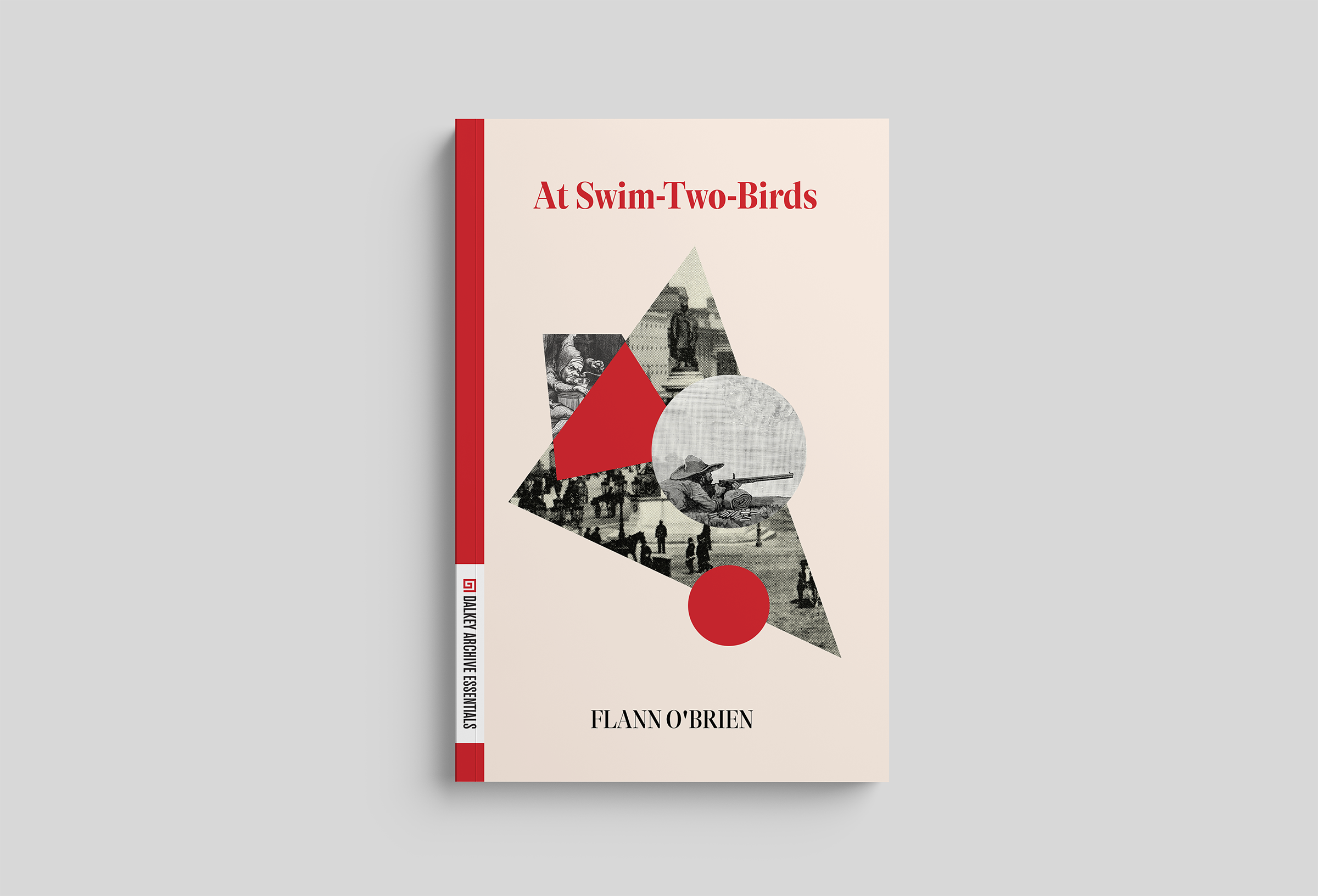
possibility out of "At Swim-Two-Birds," taking that book further,
adding another integer to its basic idea. Absolute artificiality. We
will have then the invented narrator telling his story which is of
course the novelist’s story. We will also have the invented novelist
telling his own story, the true story, if you will. Borrow, as in Flann
O’Brien’s "At Swim," characters from other novels, my own as well as
others. Some of these characters are to be in the novelist’s novel,
some could be in the narrator’s novel, the true story. Start out with a
perfectly straight and legitimate Chapter I wherein the narrator begins
his story, that is, the novelist’s story. Perhaps even a Chapter II and
Chapter III. Then begin with Chapter I again, this time though the
narrator tells his own story. He can be more or less the figure he
presents himself as being in the novelist’s story or he can be somebody
else entirely. If the latter, he will of course tell the reader about
it, bitterly complaining or resigned or amused. Perhaps a third of the
way through the novelist’s novel, he, the novelist, will give up on his
book and then the narrator will be free to pursue his own story. Maybe
there will be aborted scenes, scraps of conversation, etc., from the
novelist’s notebook in which the narrator shuffles around trying to
figure things out. Perhaps the narrator’s tale should come to the same
impasse that the novelist’s tale came to. This has to be done so that
all trace of the specious is gone, that is, all trace of the precious
or arty. It must have the strength of "Tristram Shandy" and Flann
O’Brien. It should be a fairly short book so as not to exhaust the idea
with repetition. Characters are to be drawn from all over, all sorts of
novels, so that we might have Mike Hammer speaking to Humbert Humbert,
etc. End of the novel might have the novelist writing a suicide scene
for himself or some scene of misery. The narrator in his own book opens
the door one evening and there he sees himself. Or the narrator, after
the novelist has run into a dead end, finally realizes that he is free.
One day he gets a letter from the novelist or the novelist comes to
call on him to persuade him to come back to his novel or, better, to
persuade the novelist to use the story for his own or at least to
borrow details and scenes from it. The book ends with the narrator
taking a plane to get away from the novelist’s story, perhaps as well
as from his own." And there were other notations that I made
before actually beginning the book. I will pull out a few odds and ends
from this, which will probably give you an idea of how I began working
on this book. "The book to open with a preface of sorts or
letter from the novelist about the book he’s beginning, his doubts
about it, etc., etc. This letter to a friend. And then start with the
novelist’s Chapter I and then go into it with that chapter or two more,
as I have already noted. The letter should be tinged with a kind of
arrogant bravado and an anger about how he has been ignored, perhaps a
touch of self-pity and romanticism about the writer’s life. In the
letter references to earlier books to be made, titles taken from
"Imaginative Qualities" and "Splendide", perhaps a section on games to
be used, and so on. In this book I think I would like to do what I have
always wanted to do, which is to put into the book sections verbatim
from other works of mine, books, stories, poems, essays, reviews. I
would like to bust the goddamn novel apart and put it together again
for once and for all and prove to myself that fiction is real unto
itself, that it is total invention, that it is total prose, that it is
the absolute reality of fiction that matters in terms of writing
fiction." And then I have a short list here of lists that I
was thinking of using at the very beginning, which includes "titles of
books, old reviews, friends and acquaintances, popular songs,
restaurants, names of teams, cities and towns, entertainers, society
people, people of wealth and power, magazines, newspapers, journals,
writers, critics, titles of short stories, essays, vacation spots,
bars, cocktail lounges, etc., etc. At the end of the book, after Lamont
decides to either shelve or scrap the novel which he can’t seem to get
right, the narrator goes over to another novel, deciding to impersonate
some obscure character. We see him worrying about getting his speech,
clothes, etc., right; either an American novel or British since he
cannot speak a foreign language." In any event, the point is
that there was a master plan in terms of beginning the novel but after
that the novel was literally based upon what I had already done, until
I was maybe a hundred pages into it, at which time I knew exactly how I
wanted it to go. I didn’t know where the pieces would fit or how, but I
knew what pieces had to be written. I also knew how I wanted to end the
novel and I knew that I wanted to have Lamont’s novel included in this
novel. I had a clear idea of what I wanted to do but I didn’t know how
to go about it and I was foolish enough to think that it could be done
briefly. That was before I realized the problems I had raised for
myself. I didn’t think I would ever get this damn novel finished. It
just seemed to go on and on and on. I knew what I had to do next, for
instance, when I was writing "A Bag of the Blues." I knew that I wanted
a chapter "Like Blowing Flower Stilled." The problem was how to go
about this. I also had a chronological problem because there were
certain chapters of Lamont’s novel and certain sections within
"Mulligan Stew" that could only be written after I had posited certain
facts, information, and data in the earlier sections. So even though I
wanted to go ahead with certain sections, I couldn’t go ahead with them
until I had written sections which naturally fall before them. There
were sections that could be written ahead of time; one was the
concluding section of the book. But even that was tinkered with before
I had what I wanted; after I had finished the book, there were things
that had to go into those gifts given at the end that I hadn’t put in
the first draft. It was indeed like juggling a dozen balls at once.
There were times when I thought it would be impossible for me to do it
because I didn’t know enough, not in terms of writing, but I didn’t
know enough in terms of the layered quality of this novel. This was a
novel that surprised me when I was about fifty pages through because I
suddenly realized that what I thought I wanted to do, I could do, and
that was to remove myself from the novel for the first time, to invent
a voice and tone that for the first time could in no way at all be
identified with me. It was a disembodied voice. It was a tone that
permeated the novel and seemed to be cut loose from the man who wrote
it. Total fabrication. It was a very odd thing to come to realize that
this was something that I could do. Oddly enough, once I realized that
I could do it, then the constant worry as I proceeded with the novel
was making false steps that would destroy that fabric that I could see
myself creating. |
|