

The Review of Contemporary Fiction
Mitsutaka Oide, "Thinking the Opposite: An Interview with Yoshio Aramaki"Thinking the Opposite: An Interview with Yoshio Aramaki
Mitsutaka Oide
Yoshio Aramaki was born in Otaru, Japan, in 1933. An architect by training, he runs an art gallery as well as a construction company in Sapporo. Aramaki made a debut with his highly speculative fiction “Oinaru Shogo” (The Great Noon) and his heavily theoretical science fiction manifesto “Jutsu no Shosetsu-ron” (Theory on the Fiction of Kunst), both published in Hayakawa’s Science Fiction Magazine in 1970. One of his earlier novellas, Shirakabe no Moji wa Yuhi ni Haeru (The Writing on the White Wall Shines in the Setting Sun) won the1972 Seiun Award, the Japanese equivalent of Hugo, voted and decided every summer at Japan’s National Science Fiction Convention. Two of his earlier short stories, “Yawarakai Tokei” (Soft Clocks) and “Midori no Taiyo” (Blue Sun) were translated into English (the former printed in Interzone #27 in 1989, the latter in Strange Plasma #4 in 1991). Another story “Ponrappu Gunto no Heiwa” (War in the Ponrappe Islands) appeared in English in Lewis Shiner’s edited original antiwar anthology, When the Music’s Over (1991).
Despite the unconventional and metaphysical quality of his earlier works, Aramaki, in 1990, launched a hardcore entertainment series of what he designates “Virtual Reality War Novels,” with the Admiral Isoroku Yamamoto, the real-life naval commander during World War II, as a central character reincarnated in alternate history. The first volume of this series Konpeki no Kantai (Deep Blue Fleet) published in December 1990 did not seem very promising, but the opening of the Gulf War in January 1991 soon helped the series to attract a much wider audience, leading him to start a different series called Asahi no Kantai (The Fleet of the Rising Sun); the two series, totaling some twenty-five volumes, wound up selling five million copies. The great popularity of this emerging subgenre came to the attention of the New York Times, which featured on March 4,1995 Andrew Pollack’s article “Japanese Refight War in Pulp Fiction,” based upon interviews with Aramaki and other writers of this new literary camp. The following interview was conducted in the heyday of the Virtual Reality War Novels by Oide Mitsutaka, a military journalist and big fan of Aramaki’s fiction, and printed first in The Deep Blue Fleet Casebook published in 1992 from Tokuma Publishers. (TT)
Mitsutaka Oide: Could you talk a bit about your background from the time you made a debut as a writer until now?
Yoshio Aramaki: When I was young, I was involved in the SF fanzine called Core in Hokkaido. But since I was far from Tokyo, I made a late debut as an SF writer: when I sold my first story to Hayakawa’s Science Fiction Magazine in 1970, I was already thirty-seven years old then. Some said I came out just in the beginning of the second phase of Japanese SF writers, but I thought I belonged to the very end of the first generation. Some even said that I was the father of the restoration/revival [laughs].
As a latecomer, I also struggled a bit. The early SF works were classified into science fiction “themes” such as a time travel or cultural anthropology. Each story had some kind of theme. Most of the good themes were already taken when I began writing, and just like Japan after World War II, there weren’t any good ones left [laughs].
Being a latecomer, I had to have something new. In those days, no one was interested in your writing if you were simply imitating the work of others. I studied psychology at Waseda University. But when I returned to Hokkaido in 1957, I entered Hokkai Gakuen University’s Construction/Engineering Department, which was necessary in order to inherit my family business. I entered the school as the top student but I hardly went to classes. I was working at a job site during the day, you know? I had managed to attend about one-third of the classes and I got a special permission to graduate from the school. For this reason, I have licenses in Construction and Architecture. Using the knowledge of this field and psychology as well as philosophy, I wrote “The Great Noon.” It was first published in the fanzine Uchujin (The Cosmic Dust).
Then Mr. Yu Mori (Pen name: Hiroshi Minamiyama), chief editor of Hayakawa’s SF Magazine at the time, also published the story in SF Magazine, and I was featured as a debut writer. It was 1970. I guess I was lucky.
Most of my early short stories were collected in Soft Clocks and Space 25th Hour (1978, Tokuma Publishers). You could say that those are my early SF works and those are the ones that are now being recognized overseas.
MO: In 1989,”Soft Clocks” was translated into English and published in Interzone, and in 1991,”Blue Sun” was published in Strange Plasma. Since those stories were well received, your work was included in an SF anthology by an American SF writer. Could you talk a bit about the background of how these translations came about?
YA: Let me explain the process. Mr. Takayuki Tatsumi was serving as a liaison in this process while he was studying abroad at Cornell University. He met Ms. Kazuko Behrens there. She was married to an American but happened to be from Sapporo and expressed an interest in translating my story. That was the beginning. But a literal translation of a Japanese SF will not work for general audiences in the English-speaking countries. So Mr. Lewis Shiner, an SF writer from Texas who was associated with the mid-eighties cyberpunk movement, rewrote or “stylized” some of my stories. “Soft Clock” became “Soft Clocks” and was published in the British SF magazine, Interzone. Later, “Blue Sun” was also published in the American magazine, Strange Plasma. As was noted in a book review, the concept of a meta-SF, currently popular in America owing to P. K. Dick, Thomas Disch, Samuel Delany and Barry Malzberg, had been adopted by a Japanese writer twenty years ago.
Then, when I was attending the SF World Convention in New Orleans in 1988, I met Mr. Shiner. He mentioned to me that he was planning to publish an anthology of tales against war and violence and asked me if I would write one for it. I agreed, and I wrote “War in the Ponrapp Islands” which was published in the summer of 1991. It has not been published in Japan yet.
MO: I will ask you about “War in the Ponrapp Islands” in detail later, but can you first explain your transition from your early meta-SF works to your recent compilation of your works, “Deep Blue Fleet”?
YA: For SF Magazine, “Tales of White Devils” series was the last of the series. A job as a writer can be quite scary, you know? When the chief editor, Mr. Yu Mori, resigned the position, there was no more work for me, so I went through a dry period.
When Shodensha Publishers in Tokyo decided to publish works other than novels, I was asked to write for them because Ryo Hanmura was writing Historical Gothic. I suppose they had been reading my “Tales of White Devil” series. So I turned around 180 degrees in “Blank” series. I probably disappointed some loyal fans but I didn’t have a choice because it was the publisher’s request. This is the world of supply and demand after all, you know? Tokuma saw this change and called me. I then started the “Kinmeria” series in 1976 from Tokuma. They sold quite well. I also began writing the “Big Wars” series for Tokuma around the same time, that is, in 1978.
Meanwhile, in the mid-eighties, we entered a stagnant period in SF literature. It was around that time that I resigned from the Science Fiction and Fantasy Writers of Japan. I didn’t have a choice and I was writing pseudo-Gothic mysteries for Kodansha. But with the emergence of Mr. Hideyuki Kikuchi and Mr. Baku Yumemakura, even the trend of Historical Gothic seemed to have been altered.
Later, an editor from Chuo Koron Publishers, who claimed to be a loyal fan of my work since the beginning, contacted me. He was planning a new sort of publication and wanted to feature something unique. After brainstorming, I began writing Niseko Fortress 1986, the first one in the “Fortress” series. This was based on “Big Wars,” and in order to produce a new work, you have to follow several steps. First you get books and materials from which you gain knowledge and gather data. From this you establish a knowledge base that can be added to or modified.
Until very recently in the early nineties, I was writing the “Sarutobi Sasuke” series for Kadokawa. For this series, I explored the Sengoku period (the Age of the Civil Wars) for the first time. If I may describe my field in graphical terms wherein the vertical line stands for time and the horizontal line for space, I covered the ancient period with “Blank” series. “Sarutobi Sasuke” was the Sengoku period (the Age of the Civil Wars). Then, “Shinshu Byakuma-den” (Tales of the White Devil) treated the Hiraga clan from the Tanuma era of the Edo period. I have not yet tried the Meiji period or prewar period, but I’m planing to do so. So once I get to World War II, my work will then be all connected, covering almost every historical period in Japan. From a spatial point of view, “Big Wars” is already expanding into the space. I believe such “largeness” of the scale is quite useful. Because when you master the Sengoku period (the Age of the Civil Wars), as I explained in The War Strategy of Deep Blue Fleet (Tokuma, 1992), you begin to understand that the military strategy that approximates that of World War II. It was based on the theory of generations. Even now, the theory of generations strategy exists as a principle of a military strategy. So now that I understand the basic principles, I can then apply them across time.
Also, for background in general, SF requires the construction of an entire world. As a result, you must gain a shallow but broad knowledge of all areas. This explains why I have books of all kinds, from pornography to philosophy, on my bookshelves. It is impossible to build an SF-like world unless you have this breadth of knowledge. So, you could say my broad knowledge base is a result of being an SF writer for twenty-five years. Deep Blue Fleet was thus based on all of this accumulated knowledge.
MO: In 1978, you already mentioned in your interview with Mr. Tetsu Yano that you felt you should definitely write about World War II.
YA: It is true that I was feeling that way then. But I could not write without the adequate preparation. As I’ve just explained, a writer doing these sorts of works must first gather materials, read books, and build a strong base of knowledge. What I was lacking was the knowledge of weapons and tools. I gradually began gaining this knowledge when I studied airplanes in “Fortress” series or ” Big Wars.”
The reason World War II is so important is that I intend to write about the Japanese race. When you think of the Japanese race historically, it was not until World War II that the Japanese played a major role in world history. In other words, during this part construction of world history and international movements, Japan, for the first time, was itself a major player. Until then, Japan was kind of a country bumpkin located on the edge of the Asian continent. We don’t know, maybe it was marginalized in this way, but either good or bad, Japan did participate world history beginning in the 1930s and shook the world. From this point of view, I think that World War II obviously was indeed a significant event for Japan.
I was in the second grade when the war broke out. It was over when I was in the 6th grade. You could say that I spent pretty much my entire elementary school life in wartime. We all read lots of SF stories during the war. My parents would get mad at me, so I used to read them under the covers with a flashlight. That kind of feeling seems to have had an impact on readers of my generation that remains even today. Even a professor of International Politics said that he enjoys reading my stories.
Stories that were popular when I was a child such as “Sunrise of Asia” or “Floating Flying Island” are so unscientific and ridiculous if you read them now.2 But I certainly remember how exciting they were as a child attending a national school at that time. I want to recreate these feeling of excitement in my stories. I try to introduce some unusual or unexpected weapons. It is the era of new ideas so I try to come up with some of my own. Even during World War II, the Japanese military were doing some very strange things. I was reading some weekly magazine where I learned that they made navy soldiers dress in women’s costumes and pretend to be bathing in the sun. Then they approached the enemies and attacked them. They won some fights that way. They did many such silly things that are probably at least as improbable and fantastic as anything I have ever invented.
MO: As examples of similar kinds of impossible events that you’ve invented, in your own Deep Blue Fleet, you have the Japanese military landing by a parachute in the middle of Washington D.C. and directly approaching the American mothership, and advising them to surrender.
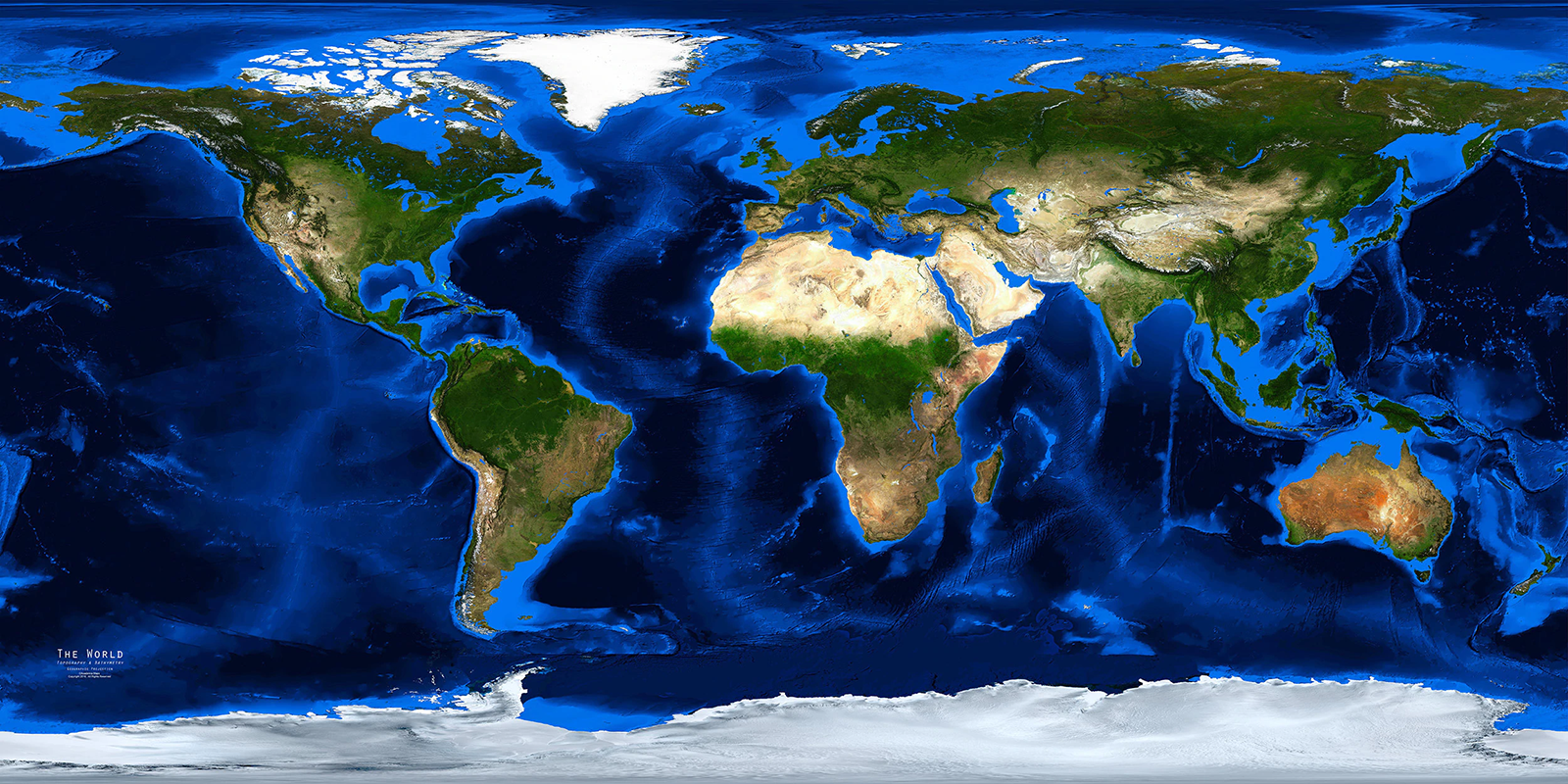
YA: Well, even impossible things can become possible in stories? That’s why fiction is interesting. As with Swift’s story of Gulliver, once you start thinking unconventionally you begin to discover new things. Even when you look at a world map upside down, you begin to see something very interesting.
MO: So, for example, in Deep Blue Fleet, the captain Otaka obtained a map from England, because he thought that the strategy would become too rigid if he used a Japanese version of a map with Japan in the center . . .
YA: When you look at a map made in England, England is the center of the world. Japan is a little country on the edge of the world. But now we all recognize the world as a globe. Like geopolitics, unless you understand the world globally your war strategy will be fatally wrong.
MO: Illusionary meta-SF, Gothic SF, military simulation: you have covered a truly wide range of world construction. Despite a variety of your experiments, does “Jutsu no Shosetsu-ron” (Theory on the Fiction of Kunst) still constitute the base for all these?
YA: Yes, it was. “Theory on the Fiction of Kunst” basically reexamines Heinlein’s work. Heinlein was also involved in the construction industry like me. What’s important is to create things by hand, and to think as if you are at a job site in real time. At a job site in real time, there is actually an incredible amount of mental activity.
Classic literature often does not deal with the concept of jobs in real time. When they talk about the problems of the family, of man and woman, these problems are discussed as social problems, or as literary “theme.” In fact, in our lives, especially for men, we spend a much longer time at work. There we use different things to write, to print, and to make things. I always wonder why most writers don’t write about this. Maybe, this is a weakness in classic literature. At any rate, I believe that to create things in itself provides a psychological peace or a conscious purpose for being a human, something important for living. That, at least, is the kind of SF I write.
Also, what was discussed in “Theory on the Fiction of Kunst” was a different way of handling problems. Classic literature deals with a problem in life or in society by simply presenting it. Depression may lead to a suicide or nihilism. Modern literature is especially like that. It is the victim literature of the victim. But in SF literature, especially Heinlein’s stories, people aren’t usually mere victims: instead, they solve these problems.
Even in the Deep Blue Fleet series, Japan encounters many serious problems. Many of these relate to Japan today. In other words, my series explores how Japan can remain in peace. The constitution of peace in writing or peace activity alone will not solve the world’s peace problems. If that were all it took, it would have been solved during the Wilson era. When you encounter these problems in my writings, I try to simulate how we can realistically solve them. This is my major theme. Simulation is itself a rather postmodern concept. “This could be a mistake but why not try it?” This is how Prime Minster Otaka in Deep Blue Fleet comes up with various ideas. By reflecting on past mistakes, they do not repeat them. They don’t protect an island; they do not attack the mainland. Losing is winning. All sorts of things can be created by thinking the opposite. I believe that’s why people have found my work interesting. In any event, problems must be solved. Everyone, including Asahi Newspapers, other newspapers, scholars, and governments, says we have to do something. But no one comes up with a detailed plan. This is a problem. Of course, I am only an amateur, so I can be wrong. I may not be accurate but I give it a try. Failure itself can be a basis for the next success! I am not a man unless I take detailed action. A job must be detailed. It doesn’t help to simply criticize faults like professional critics. Anyway, under the circumstances that exist now, I’ve been thinking that I have to do something—and as a writer, this sort of speculative problem-solving seems worthwhile.