![]() |
Book Description
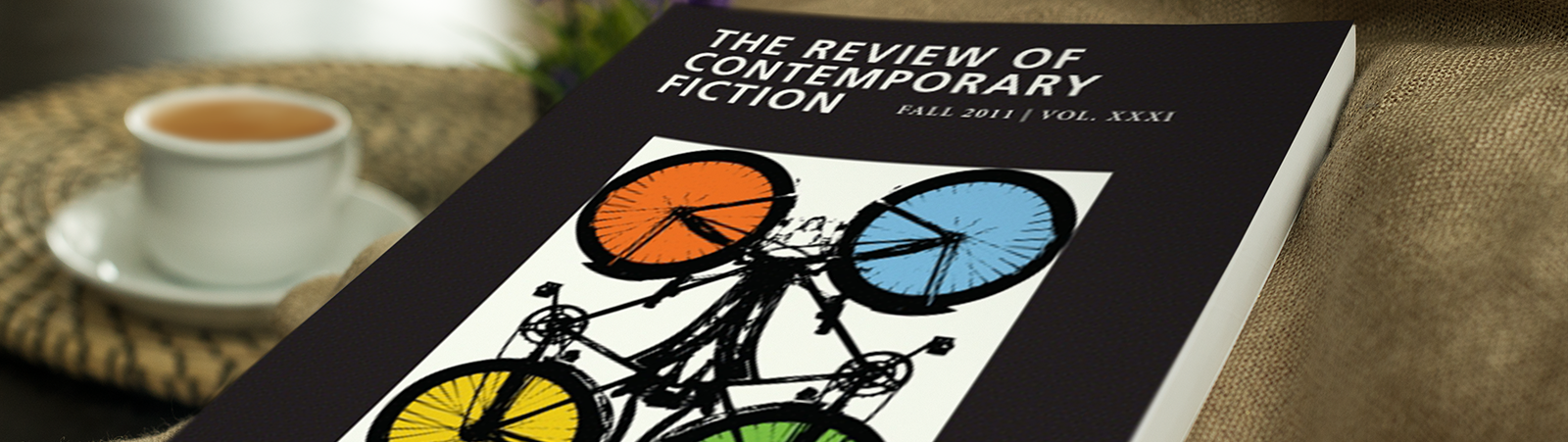
Mr. Optimus Oloop is a Finnish statistician living in Buenos Aires. His life runs according to a methodical and rigid schedule, with everything—from his meals down to his regular visits to the city brothels—timed to the minute. But when an insignificant traffic delay upsets this sacred schedule, and on the day of Oloop's engagement party, the clock begins ticking down towards a catastrophe that no amount of planning will avert. A playful and unpredictable masterpiece of Argentinean literature, raising comparisons to Ulysses and serving as a primary inspiration to authors such as Julio Cortázar and Alfonso Reyes, Op Oloopis the first novel by lawyer, Hellenist, boxing referee, and decagenarian Juan Filloy (1894-2000) to be translated into English.
About the Author
|
Juan Filloy was an excellent swimmer, dedicated boxing referee, and talented caricaturist; he spoke seven languages and he practised as a judge in the small town of Río Cuarto, 200 kilometres from Córdoba, where he spent nearly the whole of his life. He died in 2000 at the age of 106. A world champion palindromist, he made use of the entire dictionary in his books, coined new words, and used only seven letters in all the titles of his works. He received various distinctions during his lifetime and was nominated for the Nobel Prize. |
About the Translator
| Lisa Dillman is a translator from Spanish and Catalan and a lecturer at Emory University. |
Praise
"Humor is 'all pervading' or it's nothing at all, as Juan Filloy, Shakespeare, and Max Ernst always knew."—Julio Cortázar"His work is an infinite exercise in allusive realism, in constant irony, a species of human comedy . . ."—Mempo Giardinelli, La Nacion
"We Argentinians have lost the last of our true comedians, Juan Filloy, philosopher of the soul: a man whose life managed to span three centuries, because he always knew how to live outside the current of the times."—Luisa Valenzuela
"Lately [Filloy] has been rediscovered by younger writers and critics, who have compared him with Jorge Luis Borges and even with Balzac . . . Freud liked [Op Oloop] so much that he sent Filloy a hand-written letter of congratulations."—The Telegraph, from the author's obituary
He’d taken great care writing the invitations. Now all he had to do was address the last envelope, to his closest friend, Piet Van Saal. But he couldn’t. As though two leaden talons had alighted on his shoulders, determined to wrench him from his task.
He sat there for quite some time, his head lolling against the headrest of his swivel chair. Laxity suited him. Then, slowly, demurely, he opened his eyes. And once again leaned toward the desk, trying to fool fate. He looked left and right, furtively—like a common criminal—and took up his pen. But he could get no further than the S of Señor. A fine, elegant capital S, like a meat hook. And on it he hung what remained of his body (fatigue) and soul (exasperation).
Thus, Op Oloop was convinced yet again that it was simply impossible for him to act contrary to his nature. “SUNDAY: WRITING BETWEEN 7:00 AND 10:00 A.M.” That was the rule. When life is as ordered as a mathematical equation, you can’t just skip a digit whenever you feel like it. Op Oloop was entirely incapable of any impromptu act that might violate the pre-established norms of his routine; even such a trivial, graphical act such as addressing an envelope he’d already begun while still within the allotted time.
“Oh well. I’ll see him in person,” he consoled himself. Op Oloop was method personified—an accomplished executioner of spontaneity: method made word; all his hopes, desires, feelings channeled into the vessel of method. He was method incarnate: undisturbed by even the tiniest rogue impulse, the littlest leap or bound—be it spiritual or carnal. How could he break that rhythm? How could he alter that flow?
“It’s no use. I’ll never break free. Force of habit has forced my hand. All I ever wanted was to mold myself from something small and insignificant into something great, like a little Renaissance jewel, patiently chiseled, sparkling with intuition, shimmering with wisdom. Alas, idiotically, I chose to enroll myself in the bitter school of constraint. I’ve turned my psyche into a stopwatch of perfect and ineluctable exactitude—complete with alarm and glow-in-the-dark numerals . . . I hear and see my failure at all times, and with absolute accuracy. And I suffer, unable to defeat my undignified genius, strangling everything from the tiniest whims to the most overwhelming urges. And yet . . . I find that a new insurrection, timid yesterday, implacable today, is trying to create chaos in the already crowded house of my mind. To no avail. Constraint has long since castrated my need to be something in the eyes of the world. Instead I’ve only managed to be some thing.”
He wasn’t actually speaking. His voice was directed inwards, towards a daimon curled up in his mind.
Just then his manservant walked in.
“Sir. Allow me to remind you that today, Sunday, at ten-thirty, you are scheduled to have your Turkish bath. You have only a few minutes if you still want to arrive on time. Shall I call for the car?”
“Unbelievable! I’ve told you before, I never forget anything: the car has already been called for. Now, please see that you deliver this correspondence to the corresponding addresses. Today.”
The mechanical nod of his manservant’s close-cropped head caused his chin to tap his chest. Then he bowed to hand Op Oloop hat, cane and gloves.
Some people measure out their lives in streetcar transfers, or overdue notices from the bank, or calendars hanging on the walls of the offices where they illicitly refill their fountain pens. Op Oloop was not one of those. His entire house was a living ledger, a meticulous archive, a veritable emporium of mementos. Each wall displayed a profusion of synoptic tables, statistical maps, and polychromatic diagrams. Each piece of furniture was a warehouse of data, of old reports, of studies and experiences. Each drawer, a file folder safeguarding the reliability of Op Oloop’s memory. Even his pockets held remnants of his profound lucubration.
Thus, being the only begotten son of method and resolve, Op Oloop was the most perfect of human machines, the most notable object of self-discipline that Buenos Aires had ever seen. When everything in life from the important universal phenomena to one’s own, trivial, individual failures has been recorded and annotated since puberty, it’s fair to say that one’s systems of classification will have been honed, condensed to their most perfect quintessence. Or else deified into a great, overarching, methodological hierarchy. Method’s very greatness, of course, is revealed in its sovereignty over the trivial!
He left the room.
The picture of savoir faire and distinction.
Standing in front of the mirror in the foyer, he put the finishing touches to his toilet, readjusting the angle of his hat for maximum jauntiness and confirming the pulchritude of his lapels. Two accents offset the shade of brown he wore: his matte-white face and his tobacco-colored eyes. Three sharp points provided the requisite contrast to the overall effect: the clairvoyant sparkle of his pupils, and the pearl stud twinkling like a star in his crimson tie.
From this vantage point, he contemplated his office. A breeze filtered in through the wide pointed arch of the open balcony. A calm morning. Curious, festive sun. His eyes fixed on the solid order of his bookshelves, the columns of bound folders, the straight plinths of adding machines and hole-punchers, standing out against the sedate gray walls, curtains, and carpets. The whole of it gave him a feeling of assurance, of self-possession, of fitting squarely into the balance of the world. He nodded. Everything was in order. The inscrutability of his labors could never have withstood the incursion into his sanctum of any fashionable decor, feeble and vapid, demanding orthopedic armchairs on which the indolent prefer to perch, facing luxurious bookbindings (containing no text), Brandt wrought-iron fixtures (vain, superfluous), and Lalique glass bowls (brimming over with thorns).
Once in the car, these ideas took off in search of higher ground. And before he knew it, Op Oloop began to sermonize to himself:
“Alas, the great princes, heirs, and priests of today—jaded by court favors, idleness, and easy women—have never truly worked, never toiled to the point of exhaustion, have never truly made a noble effort! They know nothing of the heroic, nothing of violence or the harshness of life—they live lives of sloth, privilege, wealth, and pride, receiving these gifts both from above (from God! silver spoons and embossed plates!) and from below (servants wiggling their coccyges! lackeys with bulging muscles! girls offering up fleshy caresses, cottony sweetnesses, and silken Christmases!).”
People squandered their lives tracing useless patterns in the air, on the ground, in the water, and onto objects: trails, furrows, wakes, text. Freeloaders blowing smoke rings, choreographing dance steps, contorting their bodies to play sports, all filled him with the greatest indifference. If instead of producing these inconclusive patterns they diligently counted the number of umbrellas lost in cafes, the number of cases of bigamy and appendicitis, the number of commas obstructing the clarity of local laws, then at least they would have proven themselves of some use, helping to establish indices of normative probability in the causal links between these disparate elements. Alas, not everyone is born with a calling, infused with a divine fervor. There are those who know no duty outside of tracing their pathetic patterns in nothingness. Not so Op Oloop. Wearing a raincoat, he knew exactly the number of umbrellas lost; being single, he know every line of the national jurisprudence with respect to bigamy; enjoying good health, he could quote at length the ancient and modern theories with regard to appendicitis; and abhorring lawyers, he could tally the precise number of commas speculated over in this or that tangle of Latin and hermeneutics.
The car pulled up in front of the bathhouse.
Yes, incredible as it may seem, the lonely lives of some of the most evolved specimens of our species have always swung on the well-oiled hinges of routine. Poor Kant’s imperatives never let him get past the beer halls of his own hometown; poor Pasteur’s microbes forced him to steep in a pure and pasteurized milk of solitude; poor Edison’s inventions kept him wired all day and night, insomniac and deaf. As the spirit expands, so the flesh is subjected to ineludible clichés. Imagination, fornication, and inebriation become mathematical habits—all the hours of the day become irrevocably allocated to pleasures, functions, familiar events . . . become as ingrained as duty itself. Whenever the mind tries to ascend into realms of new and sublime abstraction, matter persists and confines it in the cellar of habit.