![]() |
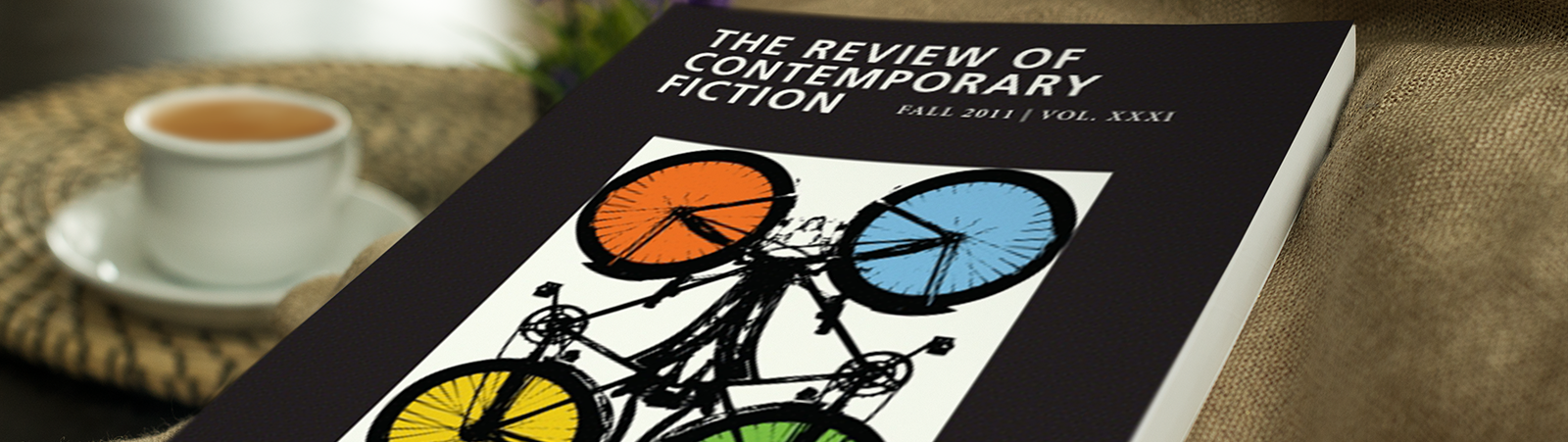
Book Description
Prairie Style is about the breakdown of location and voice. It lays out a landscape of habitations (Frank Lloyd Wright’s designs for “servantless families,” fox dens in an embankment, the two-mile long face of Chicago’s Robert Taylor public housing project, etc.) and crosses and recrosses the line between poetry and prose. The book is an acknowledgment of the “terrible frankness” of color, pleasure’s distance, and the similarity of equivocation and argument. Prairie Style is the turn inland. “Inland, one needs something more racial, say bigger, than mountains.”
About the Author
| C. S. Giscombe is the author of several books of poetry, including Giscome Road and Here, both of which are available from Dalkey Archive Press. He has also published a memoir entitled Into and Out of Dislocation. He is the editor of Mixed Blood, a poetry journal, and teaches at the University of California at Berkeley. | ![]() |
Praise
“[A] major figure in contemporary African American letters.”—Henry Louis Gates“Giscombe’s concise poems—which are always essentially unpredictable—have an odd and vivid beauty. They move in intricately woven patterns (like the candid language of risky dreams), from the emotional depths of the most private places to places post-personal yet not quite public. And they make this journey with elegance, eloquence, wit, knife-sharp observations, and tenderness.”—Clarence Major
“C. S. Giscombe makes evident a genius of attention to all the determinants of any one of us, our particulars, our people. He traces with consummate art the passage of time through his own accumulating presence, his points of origin and return.”—Robert Creeley
VERNACULAR EXAMPLES
You can always say what you are. Half the time the allegory’s music, how song goes with its cornets and saxophones. Everyone still talks about range like it was music. Do you have something to say to me? Closure re-gathers the shape of the original undoing, the place where memory changed or picked up. Or it’s human-looking: big-boned, about as noisy, parts missing or left out, parts overstated. A loud brother to the divine, an admonishment; I was two men, I was something, I was “something monstrous.” Jokes just drain the spirit.
CRY ME A RIVER
Generally, value exists in relation to opportunities for exchange—seeing something in terms of something else—but for the sake of argument say that the shape of a region or of some distinct area of a city could stand in for memory and that it—the shape—is a specific value because it’s apparent and public, and that way achieves a nearly sexual importance.
FAR
Inland suffers its foxes: full-moon fox, far-flung fox—flung him yonder! went the story—, fox worn like a weasel round the neck, foxes are a simple fact, widespread and local and observable. Vulpes fulva, the common predator, varying in actual color from red to black to rust to tawny brown, pale only in the headlights.
It’s that this far inland the appearance of a fox is more reference than metaphor. Or the appearance is a demonstration. Sudden appearance, big like an impulse; or the watcher gains a gradual awareness—in the field, taking shape and, finally, familiar. The line of sight’s fairly clear leaving imagination little to supply. It’s a fact to remember, though, seeing the fox and where or, at night, hearing foxes (and where). The fox appearing, coming into view, as if to meet the speaker.
Push comes to shove. Mistah Fox arriving avec luggage, sans luggage.