

Search the full text of our books:
 
Energy_of_delusion

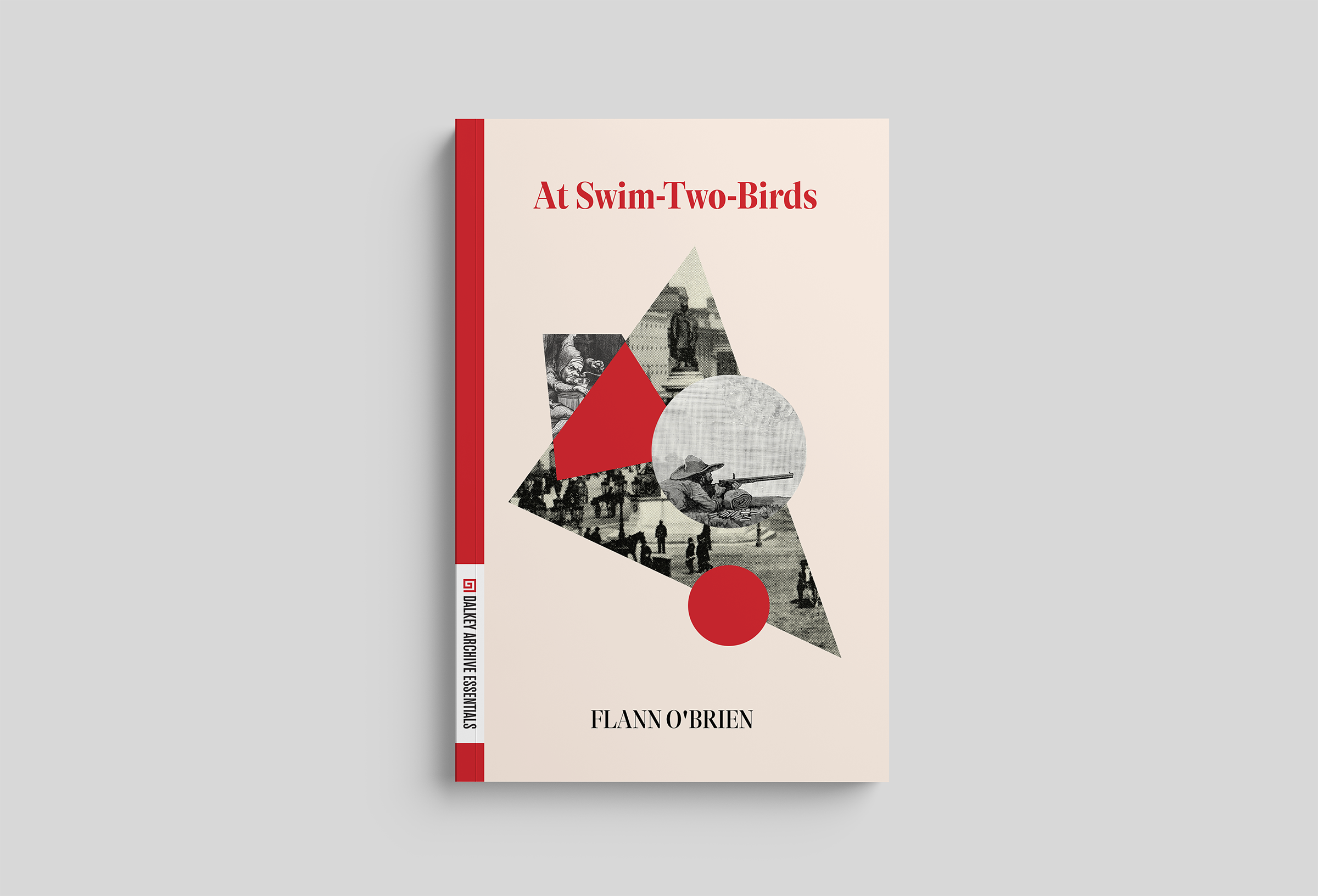
Energy of Delusion: A Book on Plot


Author: Viktor Shklovsky
Translator: Shushan Avagyan
Russian Literature Series
July 2007
428 pages,
Dimensions: 6 x 9
Paperback, 9781564784261
Retail Paperback Price:$14.95
Our Paperback Price: $11.96—20% OFF!
Add to Cart


Search the full text of this book

Book Description

One of the greatest literary minds of the twentieth century, Viktor Shklovsky writes the critical equivalent of what Ross Chambers calls "loiterature"—writing that roams, playfully digresses, moving freely between the literary work and the world. In Energy of Delusion, a masterpiece that Shklovsky worked on over thirty years, he turns his unique critical sensibility to Tolstoy’s life and novels, applying the famous "formalist method" he invented in the 1920s to Tolstoy’s massive body of work, and at the same time taking Tolstoy (as well as Boccaccio, Pushkin, Chekhov, Dostoevsky, and Turgenev) as a springboard to consider the devices of literature—how novels work and what they do.

Available in English for the first time, Energy of Delusion provides contemporary readers with a new way of thinking about how great literature is written (and how great criticism might be) that is as timely today as ever.

About the Author

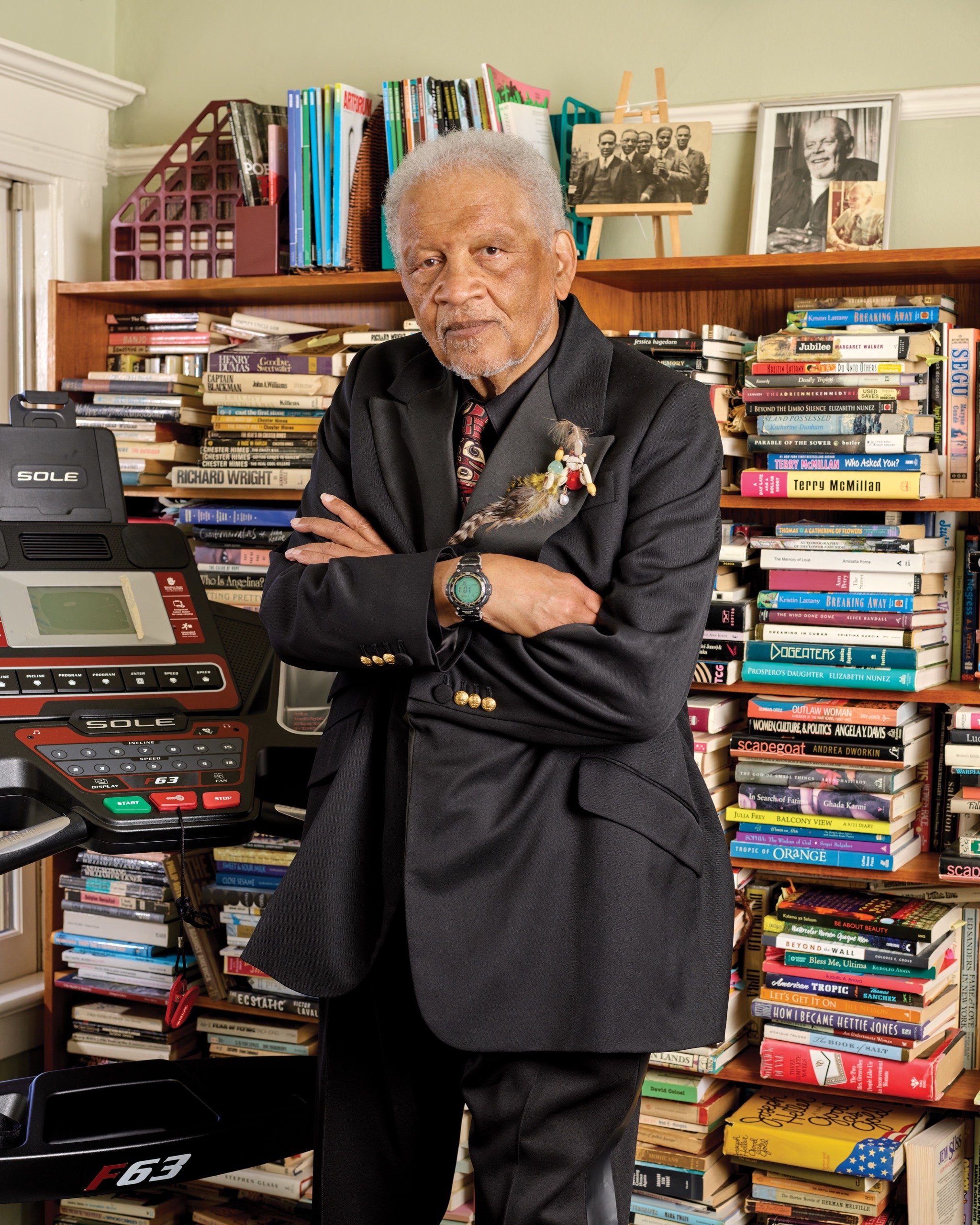
Viktor Shklovsky (1893-1984) was a leading figure in the Russian Formalist movement of the 1920s and had a profound effect on twentieth century Russian literature. Several of his books have been translated into English, including Zoo, or Letters Not about Love, Third Factory, Theory of Prose, Energy of Delusion, and Literature and Cinematography, all published by Dalkey Archive Press.

Viktor_shklovsky

About the Translator

Shushan Avagyan, translator of Energy of Delusion, has also translated the works of Armenian poet S. Kurghinian. She is working on her doctoral degree in Comparative Literature at Illinois State University.

Praise

"Perhaps because he is such an unlikely Tolstoyan, Viktor Shklovsky's writing on Tolstoy is always absorbing and often brilliant."—Russian Review

"A rambling, digressive stylist, Shklovsky throws off brilliant aperçus on every page . . . Like an architect's blueprint, [he] lays bare the joists and studs that hold up the house of fiction."—Michael Dirda, Washington Post

"Shklovsky is a disciple worthy of Sterne. He has appropriated the device of infinitely delayed event, of the digression helplessly promising to return to the point, and of disguising his superbly controlled art with a breezy nonchalance. But it is not really Sterne that Shklovsky sounds like: it is an intellectual and witty Hemingway."—Guy Davenport, National Review

Also by Shushan Avagyan:
Dust

The two-story house in Yasnaya Polyana stands with its side facing the road; it’s very old. It stands sideways because it’s part of a once unfinished house, where the lieutenant colonel’s youngest son, Lev Nikolaevich Tolstoy, was born.

It’s a comfortable house, but everything in it—the windows, the staircase, even the doors—are arranged oddly, not in the usual places.

This strange, well-known house looks like a traveler, a wanderer, who is resting on the side of the road after a long journey.

There is a room in the basement that remains from the old building. The window here is unusually high up.

The room was intended for storing ham hocks.

Another building stands much farther back, on the side, behind the full-grown trees.

This was the school founded by Lev Nikolaevich, and where he taught; the other teachers were students who got expelled from the university. One of them was Fyodorov’s student.

Fyodorov used to say that the dead had to be resurrected; mankind should set impossible tasks for itself, and after its rebirth, mankind would exit earth as if from a waiting room, and leisurely take over the cosmos.

Lev Nikolaevich knew Fyodorov, who worked at the library, which was later expanded and named after Lenin. Fyodorov’s student, who taught the peasant children in Tolstoy’s school, would become a character in Tolstoy’s last novel Resurrection, the one who goes into exile with Katyusha Maslova.

She leaves because of someone else—Nekhlyudov, a man she loved and still does; she leaves to forgive him for the love that was stolen from her, for all her suffering and his belated repentance.

The estate is old, and the forest surrounding the house became overgrown after Lev Nikolaevich’s death, though it doesn’t look sombre. Nobody cuts down trees around here and the forest has spread with bright, joyful birches.

Here, in this quiet underground room that used to be a storeroom, is Lev Nikolaevich’s second office. He wrote here, separated from others by a flight of stairs. It was a quiet room.

There is another office where he wrote, too, and received his guests. There is a large print on the wall of orchids in a basket.

Angels and the Sistine Madonna.

Across the print, which with time has turned into wallpaper, hang shelves that hold the volumes of the Brockhaus and Efron Encyclopedia.

In one of the volumes there is an article called “Marxism.”

The world in which Lev Nikolaevich lived was unfathomable. Everything kept changing in it.

Everything kept moving. In this world Lev Nikolaevich studied Greek in order to help his son with his studies at the Gymnasium. The son never finished school, while Lev Nikolaevich read Homer in the original and still found time to browse through the encyclopedia. Everything moved in this unfathomable world, as if entering into the cosmos. Reality itself moved.

Lev Nikolaevich never mishandled books.

He had many books, it was almost impossible to read them all. He was ahead of his time, like a flag caught in the currents of a favorable wind.

Throbbing between memories and hope—the poet Batyushkov wrote—interrupted only by madness.

By “memories of the future,” Batyushkov meant “hope.”

With the strong confident hand of a man who knew how to hold both a spade and a pencil, Lev Nikolaevich underlined a section from “Marxism” in his encyclopaedia.

The pencil-marked words read: “social reality determines consciousness.”

Social reality is stepped—it is multi-temporal. The epochs existing in it either clash or peacefully coexist.

Lev Nikolaevich had hoped that mankind would leave the old shores and move into the ocean of total knowledge. It would build a new world that had no notion of time. Tolstoy believed in the eternal.

The eternal past is also based on the peasant and his work. The eternal—it’s the peasant’s yard and his plow. It’s villages of harvesters. It’s labor that never changes.

Let’s go back to man before historic times.

At some point in time, man passed by and left his human footprints.

They turned into stone. There were identical footprints next to them, slightly smaller.

The woman and child passed by. Time brings about changes.

It says in the Apocalypse: “There will be a judgement day, and the sky will erupt like a scroll of parchment, and time will cease to exist.”

We still exist, and so will our offspring, if we are wise enough and strong enough during times of change.

Lev Nikolaevich, also known as Count Lev Nikolaevich Tolstoy, the owner of Yasnaya Polyana, knew the importance of history.

The old road from Kiev to Moscow went past his gates.

For many centuries, they herded cattle along this road, and pilgrims walked to and from Kiev.

Beggars lazily passed by.

Then cars appeared when Lev Nikolaevich was still living.

He used to come out and talk to the people who rode in these new outlandish vehicles.

It’s likely that during his lifetime he even saw airplanes flying over Yasnaya Polyana.

Lev Nikolaevich grew up during the time before railroads, and he didn’t like trains. He recorded the Russian saying: “What vast forests were tamed by trains.”

For him, this era of railroads was a time of change in things that didn’t really need any changing.

This book that I’m writing in the late years of my life is called Energy of Delusion.

That’s not my phrase, it’s Tolstoy’s.

He wished for those delusions to never end. They are footprints leading to the truth, the search for the purpose of humanity.

We base our work on rough drafts written by people. Unfortunately, I don’t know much about the origins of this art, and I’m too old to start studying them. Time imposes its iron chains.

But I want to look at the history of Russian literature as footprints of a movement, the movement of consciousness—each footprint a negation of the one before.