![]() |
|
Book Description
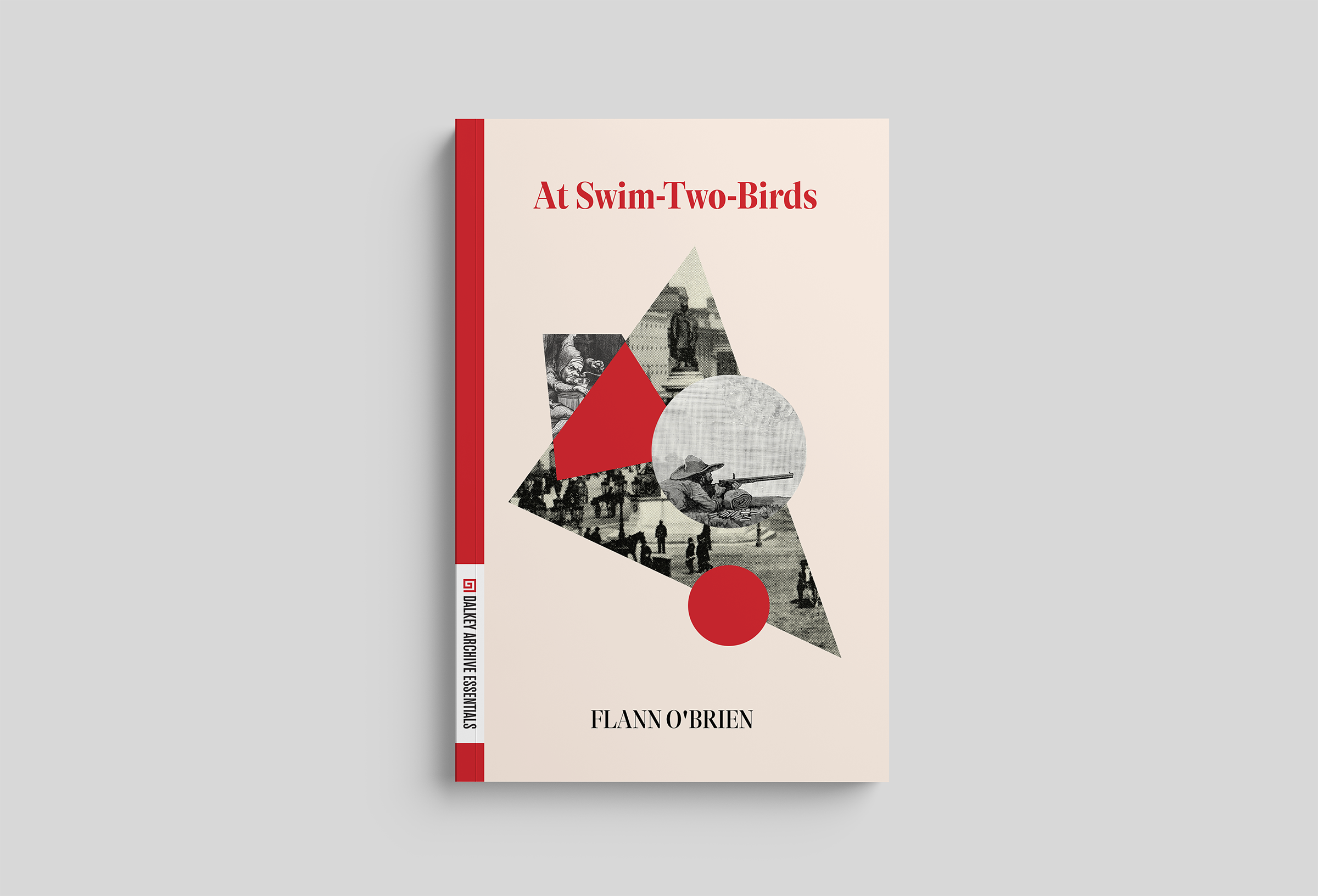
Winner of the 2007 Truman Capote Award for Literary Criticism, A Temple of Texts is the latest critical collection from one of America’s greatest essayists and novelists. Here, William H. Gass pays homage to the readerly side of the literary experience by turning his critical sensibility upon all the books that shaped his own development as a reader, writer, and human being. With essays on figures ranging from William Shakespeare and Gertrude Stein to Flann O’Brien and Robert Burton, Gass creates a "temple" of readerly devotion, a collection of critical explorations as brilliant and incisive as readers have come to expect from this literary master, but also a surprisingly personal window into the author’s own literary development.
About the Author
| William H. Gass—essayist, novelist, literary critic—was born in Fargo, North Dakota. He has been the recipient of the first PEN/Nabokov Award, the PEN/Spielvogel-Diamondstein Award for the Art of the Essay, three National Book Critic Circle Awards for Criticism, a Lannan Foundation Lifetime Achievement Award, the Award for Fiction and the Medal of Merit for Fiction from the Academy and Institute of Arts and Letters, and fellowships from the Rockefeller and Guggenheim Foundations. He lives in St. Louis. | ![]() |
Praise
"No one is better than William H. Gass at communicating the sublime and rapturous excitement of reading."—Washington Post"Gass shares his lifelong love affair with books as well as his insights into the nature of humankind, religion, and art."—Library Journal
"[Gass's] pieces pack a punch of intoxication: they are exhilarating, stimulating, invigorating, and they can make you feel greater and wiser than you really are."—Stephen Schenkenberg
More Information
Also by William H. Gass:Cartesian Sonata and Other Novellas
The Tunnel
The Tunnel read by William H. Gass
Willie Masters' Lonesome Wife
I'm here to tell you—speaking through the glass, between the bars, by slow post, in the babelous halls of the Academy—what you would like to hear: why, in doing what you've done, you've done the right thing.
They say you have been reading, even studying, the classics. You have been doing this at a time when not only are the classics regarded by many as one cause of our wretched world's unjust condition but at a time when the very word classic has become suspect, and is used most neutrally now to qualify old cars in good condition or to single out products stuck in an agreeable rut while the world furiously alters around them, such as Classic Saran Wrap or Classic Coke, although original is more frequently preferred, along with old-fashioned, to describe the Colonels original recipe, or dad's best girl before she became his ball and chain.
When coined in the reign of Servius Tullius during the sixth century B.C., it meant the group, among citizens, to be called upon first; that is, during a time of war, the strongest, boldest, bravest, most fit to fight; while, when the state faced choices of difficulty and moment, the wisest, most temperate, and fair; so that then, when it was used of writers, it referred to those of the first rank, and also, by an obvious step, to their works. Therefore it should now designate, with regard to the education of a citizenry still concerned with their community, the books that have most completely represented and embodied its culture, as well as those that will best instruct, enlarge, and ennoble the mind, discipline the passions, and encourage a useful and respectful approach to experience.
A classic in its field is a work with which one should begin if one expects to master its subject; something that is therefore seminal, not only begetting more books that take it as their topic but also one that contains the discipline's founding principles, or serves as the starting point for its exploration, as Jefferson City, Missouri, once did for wagons entering our uncharted West. Even if you are in determined opposition to some traditional position, it is with the classic text you must begin the right, though if the tight is to be fair, you must accept the risk, implicit in the inequality of the contest, of defeat, and of a turn to your heart, and of a change to your mind.
Literary classics break new ground, instigate change, or establish fresh standards of value, enlarging the scope of the canon, discovering new qualities of excellence, and confirming the importance of range, depth, mastery, and perfection in any artistic activity. It is instructive to observe that those who have carefully cultivated such a field of endeavor are not after yield per acre, but excellence per inch.
Oddly enough, people have always distrusted the classics, but it is now publicly acceptable to take pride in such distrust. We all dislike intimidation, so we worry about being overwhelmed by these tomes above which halos hover as over the graves of the recently sainted, because we wrongly believe they are fields full of esoteric knowledge worse than nettles, of specialized jargon, seductive rhetoric, and swarms of stinging data, and that the purpose of all this unpleasantness is to show us up, put us in our place, make fun of our lack of understanding; but the good books are notable for their paucity of information—a classic is as careful about what it picks up as about what it puts down; it introduces new concepts because fresh ideas are needed; and only if the most ordinary things are exotic is it guilty of a preoccupation with the out-of-the-way, since the ordinary, the everyday, is their most concentrated concern: What could be more familiar than a child rolling for fun down a grassy slope—that is, when seen by Galileo, a body descending an inclined plane? What could he more commonplace than Bertrand Russell's penny, lying naked on an examining table, awaiting the epistemologist's report on the problems of its perception? What could be less distinguished a subject for Maynard Keynes's ruminations on the source of its value than such a modest coin? Why should the question—What good is that?—alarm us, or why, in an age when most of the world worships money but calls its chosen God Father instead of Chairman, Lord instead of Coach, Most High instead of Star, should we shy from the same questions Plato asked, and not ask them about our business, about our love affairs, about our lip-served gods, about democracy?
Classics are by popular accord quite old and therefore out of date; while by the resentful they are representative only of the errors of their age, their lines sewn always on the bias, their authors willing tools of power and unjust privilege. Odd, then, that the good books were usually poisons in their time, when those biased pages were burned, those compliant authors jailed, and their ideas deemed diseases of the worst kind—corruptions of the spirit—to be fought with propaganda first, followed by prison, fire and firing squad, the gallows and the stake, all at the behest of the powers in place— majesties, Popes, czars, sultans, CEOs, and ClAs—the writers' names made to stand for Machiavellian casts of character, Marxian acts of mischief, Humean disbelief, and not for the clear-eyed hard-boiled arguments, exposures, revelations, condemnations, and realities their works contained.
The good books are the fruit of the tree of knowledge all right, and the devil is always offering us another fellows damned opinion, which, were we to sample it, might cause the scales to fall from our eyes, so to see suddenly that king and queen, God and all the angels, are naked, shivering, and in sore need of shoes. That is why just one good book, however greatly good, when used to bludgeon every other, turns evil; why we should be omnivorous: try kale, try squid, try rodent on a spit, try water even though there's wine, try fasting even, try—good heavens!—rice with beans. The good books are cookbooks and good readers read them, try them, stain their pages, adjust ingredients, pencil in evaluations, warn and recommend their recipes to friends.