Search the full text of our books:
 
Third-policeman-new-cover4

The Third Policeman


Author: Flann O'Brien
Irish Literature Series
March 1999
212 pages, 5.5 x 8
Paperback, 978-1-56478-214-4
Retail Paperback Price:$13.95
Our Paperback Price: $11.16
Add to Cart


Search the full text of this book

Book Description

The Third Policeman is Flann O'Brien's brilliantly dark comic novel about the nature of time, death, and existence. Told by a narrator who has committed a botched robbery and brutal murder, the novel follows him and his adventures in a two-dimensional police station where, through the theories of the scientist/philosopher de Selby, he is introduced to "Atomic Theory" and its relation to bicycles, the existence of eternity (which turns out to be just down the road), and de Selby's view that the earth is not round but "sausage-shaped." With the help of his newly found soul named "Joe," he grapples with the riddles and contradictions that three eccentric policeman present to him.

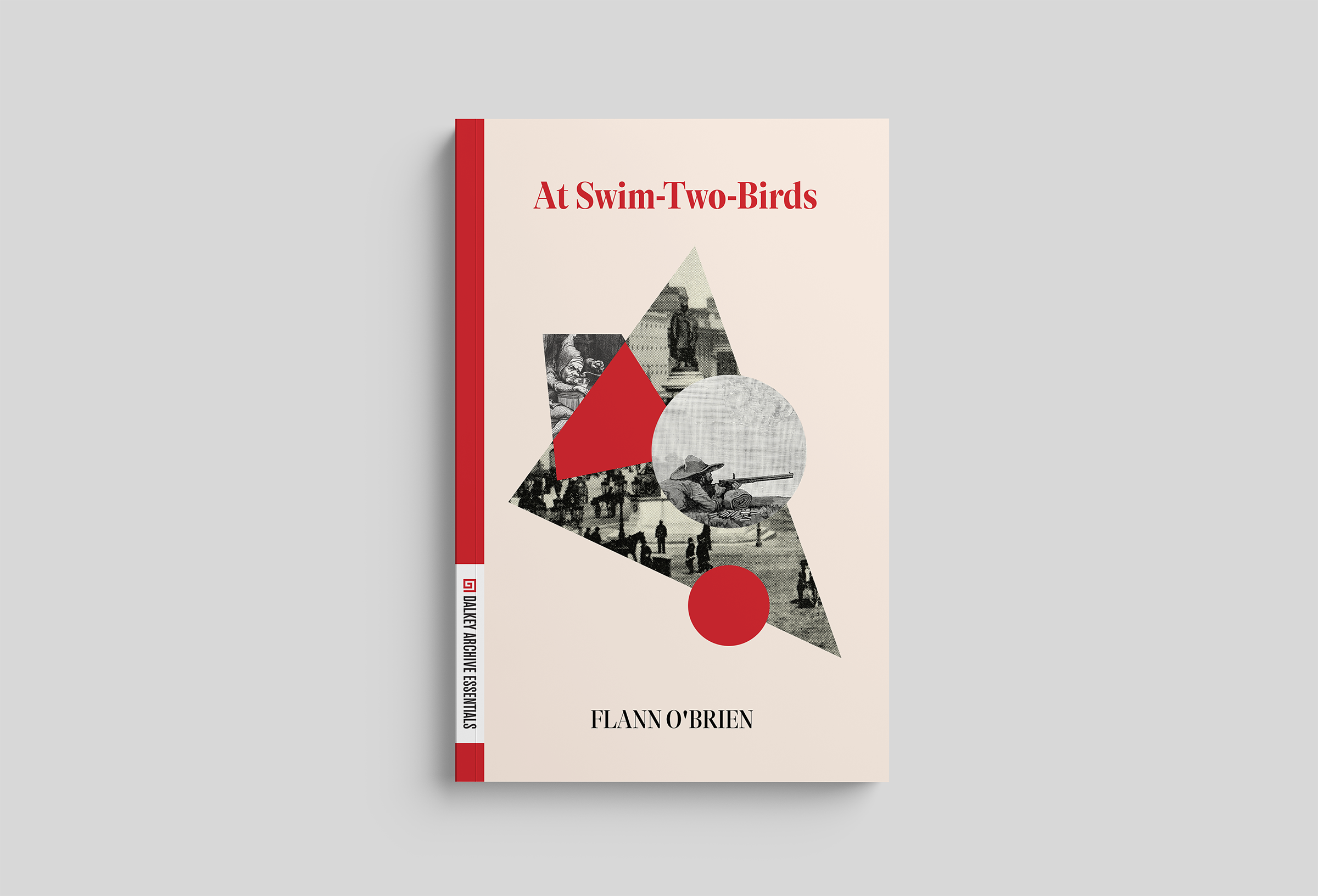
The last of O'Brien's novels to be published, The Third Policeman joins O'Brien's other fiction (At Swim-Two-Birds, The Poor Mouth, The Hard Life, The Best of Myles, and The Dalkey Archive) to ensure his place, along with James Joyce and Samuel Beckett, as one of Ireland's great comic geniuses.

About the Author

Flann O'Brien, whose real name was Brian O'Nolan, also wrote under the pen name of Myles na Gopaleen. He was born in 1911 in County Tyrone. A resident of Dublin, he graduated from University College after a brilliant career as a student (editing a magazine called Blather) and joined the Civil Service, in which he eventually attained a senior position.

He wrote throughout his life, which ended in Dublin on April 1, 1966. His other novels include The Dalkey Archive, The Third Policeman, The Hard Life, and The Poor Mouth, all available from Dalkey Archive Press. Also available are three volumes of his newspaper columns: The Best of Myles, Further Cuttings from Cruiskeen Lawn, and At War.

Flann_obrien

Praise

"As with Scott Fitzgerald, there is a brilliant ease in his prose, a poignant grace glimmering off every page."—John Updike

"If we don't cherish the work of Flann O'Brien we are stupid fools who don't deserve to have great men. Flann O'Brien is a very great man."—Anthony Burgess

"Frenetic, dazzling, unconscionably funny . . . sparkles with wit, elegance, and eruditon (authentic and mock) . . . provides delight in profuse measure."—Newsweek

"A most sardonic novel about life after death with the dead man telling the comic and terrifying story . . . a strange, original comic genius."—New York Times

"Nothing less than dazzling . . . maddening and dizzying . . . heady and exhilarating . . . it is literally funny as hell."—Time


NOT EVERYBODY knows how I killed old Phillip Mathers, smashing his jaw in with my spade, but first it is better to speak of my friendship with John Divney because it was he who first knocked old Mathers down by giving him a great blow in the neck with a special bicycle-pump which he manufactured himself out of a hollow iron bar. Divney was a strong civil man but he was lazy and idle-minded. He was personally responsible for the whole idea in the first place. It was he who told me to bring my spade. He was the one who gave the orders on the occasion and also the explanations when they were called for.

I was born a long time ago. My father was a strong farmer and my mother owned a public house. We all lived in the public house but it was not a strong house at all and was closed most of the day because my father was out at work on the farm and my mother was always in the kitchen and for some reason the customers never came until it was nearly bed-time; and well after it at Christmas-time and on other unusual days like that. I never saw my mother outside the kitchen in my life and never saw a customer during the day and even at night I never saw more than two or three together. But then I was in bed part of the time and it is possible that things happened differently with my mother and with the customers late at night. My father I do not remember well but he was a strong man and did not talk much except on Saturdays when he would mention Parnell with the customers and say that Ireland was a queer country. My mother I can recall perfectly. Her face was always red and sore-looking from bending at the fire; she spent her life making tea to pass the time and singing snatches of old songs to pass the meantime. I knew her well but my father and I were strangers and did not converse much; often indeed when I would be studying in the kitchen at night I could hear him through the thin door to the shop talking there from his seat under the oil-lamp for hours on end to Mick the sheepdog. Always it was only the drone of his voice I heard, never the separate bits of words. He was a man who understood all dogs thoroughly and treated them like human beings. My mother owned a cat but it was a foreign outdoor animal and was rarely seen and my mother never took any notice of it. We were all happy enough in a queer separate way.

Then a certain year came about the Christmas-time and when the year was gone my father and mother were gone also. Mick the sheepdog was very tired and sad after my father went and would not do his work with the sheep at all; he too went the next year. I was young and foolish at the time and did not know properly why these people had all left me, where they had gone and why they did not give explanations beforehand. My mother was the first to go and I can remember a fat man with a red face and a black suit telling my father that there was no doubt where she was, that he could be as sure of that as he could of anything else in this vale of tears. But he did not mention where and as I thought the whole thing was very private and that she might be back on Wednesday, I did not ask him where. Later, when my father went, I thought he had gone to fetch her with an outside car but when neither of them came back on the next Wednesday, I felt sorry and disappointed. The man in the black suit was back again. He stayed in the house for two nights and was continually washing his hands in the bedroom and reading books. There were two other men, one a small pale man and one a tall black man in leggings. They had pockets full of pennies and they gave me one every time I asked them questions. I can remember the tall man in the leggings saying to the other man:

‘The poor misfortunate little bastard.’

I did not understand this at the time and thought that they were talking about the other man in the black clothes who was always working at the wash-stand in the bedroom. But I understood it all clearly afterwards.

After a few days I was brought away myself on an outside car and sent to a strange school. It was a boarding school filled with people I did not know, some young and some older. I soon got to know that it was a good school and a very expensive one but I did not pay over any money to the people who were in charge of it because I had not any. All this and a lot more I understood clearly later.

My life at this school does not matter except for one thing. It was here that I first came to know something of de Selby. One day I picked up idly an old tattered book in the science master’s study and put it in my pocket to read in bed the next morning as I had just earned the privilege of lying late. I was about sixteen then and the date was the seventh of March. I still think that day is the most important in my life and can remember it more readily than I do my birthday. The book was a first edition of Golden Hours with the two last pages missing. By the time I was nineteen and had reached the end of my education I knew that the book was valuable and that in keeping it I was stealing it. Nevertheless I packed it in my bag without a qualm and would probably do the same if I had my time again. Perhaps it is important in the story I am going to tell to remember that it was for de Selby I committed my first serious sin. It was for him that I committed my greatest sin.

I had long-since got to know how I was situated in the world. All my people were dead and there was a man called Divney working the farm and living on it until I should return. He did not own any of it and was given weekly cheques of pay by an office full of solicitors in a town far away. I had never met these solicitors and never met Divney but they were really all working for me and my father had paid in cash for these arrangements before he died. When I was younger I thought he was a generous man to do that for a boy he did not know well. I did not go home direct from school. I spent some months in other places broadening my mind and finding out what a complete edition of de Selby’s works would cost me and whether some of the less important of his commentators’ books could be got on loan. In one of the places where I was broadening my mind I met one night with a bad accident. I broke my left leg (or, if you like, it was broken for me) in six places and when I was well enough again to go my way I had one leg made of wood, the left one. I knew that I had only a little money, that I was going home to a rocky farm and that my life would not be easy. But I was certain by this time that farming, even if I had to do it, would not be my life work. I knew that if my name was to be remembered,it would be remembered with de Selby’s.

I can recall in every detail the evening I walked back into my own house with a travelling-bag in each hand. I was twenty years of age; it was an evening in a happy yellow summer and the door of the public house was open. Behind the counter was John Divney, leaning forward on the low-down porter dash-board with his fork, his arms neatly folded and his face looking down on a newspaper which was spread upon the counter. He had brown hair and was made handsomely enough in a small butty way, his shoulders were broadened out with work and his arms were thick like little tree-trunks. He had a quiet civil face with eyes like cow’s eyes, brooding, brown, and patient. When he knew that somebody had come in he did not stop his reading but his left hand strayed out and found a rag and began to give the counter slow damp swipes. Then, still reading, he moved his hands one above the other as if he was drawing out a concertina to full length and said:

‘A schooner?’

A schooner was what the customers called a pint of Coleraine blackjack. It was the cheapest porter in the world. I said that I wanted my dinner and mentioned my name and station. Then we closed the shop and went into the kitchen and we were there nearly all night, eating and talking and drinking whiskey.

The next day was Thursday. John Divney said that his work was now done and that he would be ready to go home to where his people were on Saturday. It was not true to say that his work was done because the farm was in a poor way and most of the year's work had not even been started. But on Saturday he said there were a few things to finish and that he could not work on Sunday but that he would be in a position to hand over the place in perfect order on Tuesday evening. On Monday he had a sick pig to mind and that delayed him. At the end of the week he was busier than ever and the passing of another two months did not seem to lighten or reduce his urgent tasks. I did not mind much because if he was idle-minded and a sparing worker, he was satisfactory so far as company was concerned and he never asked for pay. I did little work about the place myself, spending all my time arranging my papers and re-reading still more closely the pages of de Selby.

A full year had not passed when I noticed that Divney was using the word ‘we’ in his conversation and worse than that, the word ‘our’. He said that the place was not everything that it might be and talked of getting a hired man. I did not agree with this and told him so, saying that there was no necessity for more than two men on a small farm and adding, most unhappily for myself, that we were poor After that it was useless trying to tell him that it was I who owned everything. I began to tell myself that even if I did own everything, he owned me.

Four years passed away happily enough for each of us. We had a good house and plenty of good country food but little money. Nearly all my own time was spent in study. Out of my savings I had now bought the complete works of the two principal commentators, Hatchjaw and Bassett, and a photostat of the de Selby Codex, I had also embarked upon the task of learning French and German thoroughly in order to read the works of other commentators in those languages. Divney had been working after a fashion on the farm by day and talking loudly in the public house by night and serving drinks there. Once I asked him what about the public house and he said he was losing money on it every day. I did not understand this because the customers, judging by their voices through the thin door, were plentiful enough and Divney was continually buying himself suits of clothes and fancy tiepins. But I did not say much. I was satisfied to be left in peace because I knew that my own work was more important than myself.