![]() |
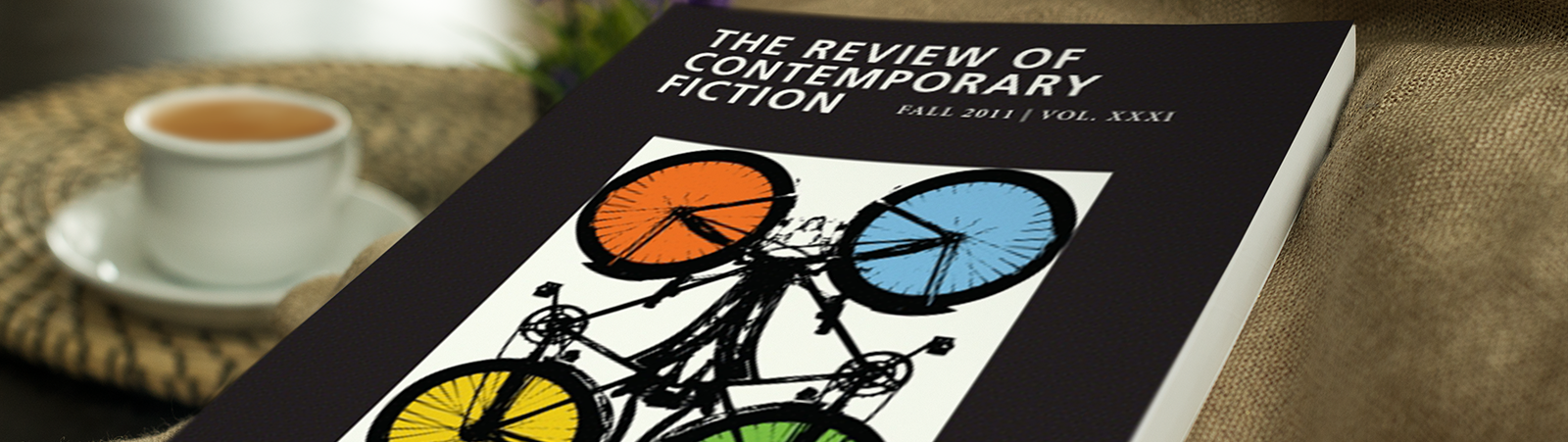
Context N°14
With Anne Burke, Zulfikar Ghose, Dmitry Golynko-Volfson, Daniel Green, Wilson Harris, Jacques Jouet, Pierre Klossowski, Radim Kopác, Violette Leduc, Deborah Levy, Nicholas Mosley, Warren F. Motte, John O'Brien, Shiva Rahbaran, Nathalie Sarraute, John Taylor, Dubravka Ugresic, Tim Wilkinson, Barbara Wright
Context Reading Violette Leduc’s La Bâtarde Deborah Levy
“At the age of five, of six, at the age of
seven, I used to begin weeping sometimes without warning, simply for
the sake of weeping, my eyes open wide to the sun, to the flowers. . .
. I wanted to feel an immense grief inside me and it came.” La Bâtarde (1964) is a harsh title for an
autobiography that is full of animals and children and plants and food
and weather and girls falling in love with girls. It’s true that
Violette Leduc was the illegitimate daughter of a domestic servant who
was seduced by theconsumptive son of her employer, but to choose such a
melodramatic and reductive title, “The Bastard,” tells us how hard it
was for Leduc to escape from the way her mother described her, and in
that description gave her daughter an internal crucifix on which to
nail her life’s story. It’s not surprising, then, that the furnace at the center of
Leduc’s autobiography, and indeed all her writing, is stoked by her
ambivalent steely-eyed mother, of whom she writes, “You live in me as I
lived in you.” Yet if the young Violette’s tears spill from eyes that
are open to the sun, the older Violette’s words spill from the same
place too. She is not blinded by her tears, nor are her eyes shut to
the pleasures of being alive. Which is to say Leduc was a writer very
much in the world despite the distress she suffered all her life.
What’s more, she was a writer who was going to give maximum attention
to the cause of her distress and create the kind of visceral language
that often irritates men and makes women nervous. This is because Leduc experiences everything in her body: As Isabelle lay crushed over my gaping heart I wanted to feel
her enter it. . . . She was giving me a lesson in humility. I grew
frightened. I was a living being. I wasn’t a statue. She doesn’t just (infamously) describe the physical
sensations of sex between women, she describes the physical sensation
of being unloved, the physical sensation of poverty, of snow, of war,
of peacocks chuckling in a meadow—she is tuned in to the world with all
her senses switched on. This is an extraordinary (and impossible) way
of being in the world, but for Leduc it was ordinary. She is a writer
who energizes whatever she gives her attention to, an orange shriveling
in the sun, an ink stain on a table, the white porcelain of a salad
bowl. Leduc refused to bore herself. Nothing is decoratively arranged
to suggest atmosphere or a sense of place or to set a scene. Everything
on the page is there because the narrator perceives it as doing
something. Even as a young girl, Leduc knew she had to find her own
point to life. Her mother wanted her to be a Protestant, the religion
of her absent father, but every time Violette tries to hear God, He is
absent too. When she describes watching her beloved grandmother pray in
church, Violette is shocked to realize that although she is sitting
next to her, she has lost her. At that moment her grandmother is not
there; she is in communion with somewhere else while Violette is doomed
to be here, to be present, to be in this world. This is no small matter
if you’re poor, female, a bit bent, not that attractive (Simone de
Beauvoir referred to her as “the Ugly Woman”), and have nothing but
your cunning and your talent to buy you a loaf of bread. We know that
Leduc’s equivalent of the prayers that transported her grandmother
elsewhere will be language. For Leduc was a born writer, a genius, as
good as James Joyce, sometimes better. With words she not so much found
the point to life as sharpened life to a point. The French essayist Antonin Artaud, who was sometimes mad,
wrote, “I am a man who has lost his life and seeking to restore it to
its place you hear the cries of a man remaking his life.” Is that why
people write autobiographies? Are they attempting to remake their
lives? La Bâtarde is not an attempt to remake Leduc’s life, although there is no doubt that writing books was her salvation. It is probably an attempt to stage her life and in so doing
witness herself as its main performer—and what a performance. By the
time she wrote her autobiography, Leduc had lived through two world
wars, had intense and volatile affairs with women—the end of a love
affair, she says, “is the end of a tyranny”—been married and separated,
written and published a few novels (in between lugging heavy suitcases
of black-market butter and lamb from Normandy to sell to the rich in
Paris), worked as a telephone operator, secretary, proofreader, and
publicity writer. She also had her relationship with the writer Maurice
Sachs to make sense of. It was Sachs, a flamboyant homosexual, one-time
reader for Gallimard, admirer of Apollinaire, Kant, Cocteau, Duras, and
Plato—not to mention fresh cream cakes, apple brandy, and
cigarettes—who encouraged Leduc to write instead of “sniveling” all
over him. Leduc portrays him as a sort of French Oscar Wilde, a man
both bewildered and fascinated by women, who filled her with terror
because of “the gentleness in his eyes.” Leduc became infatuated with
him because she has a “passion for the impossible.” What kind of
accommodation can be found, she wonders, with people we deeply love but
who cannot give us all we want? What Sachs can do is tell her to get on
with what she is best at. “Your unhappy childhood is beginning to bore
me to distraction. This afternoon you will take your basket, a pen, and
an exercise-book, and you will go and sit under an apple tree. Then you
will write down all the things you tell me.” There’s a fairy godfather if ever there was one. It was under that apple tree that she wrote the wonderful first line of her first novel, L’Asphyxie—“My
mother never gave me her hand.” Simone de Beauvoir read the manuscript
and was so impressed she became Leduc’s mentor, using her contacts to
help get it published in post-Second World War Paris. When Leduc’s
editor Jean-Jacques Pauvert offered her 100,000 francs for the
manuscript, she demanded the sum in cash, preferably in small bills. By the time Leduc wrote La Bâtarde, she was going to
return to themes she had written about before (her mother, the
deprivations of her childhood, the erotics of lesbian sexual passion,
the erotics of everything, coffee, shoes, hair, landscape), but as a
writer at the peak of her literary powers. In fact, she was uniquely
placed to write an autobiography because she was a novelist who knew
how to make the past and present seamlessly collide in one paragraph.
Leduc also knew something that lesser writers do not know. She knew the
past is not necessarily interesting. Eight lines into La Bâtarde she declares, “there’s no sustenance in the past.” This made me laugh,
because I was on page one with 487 pages of “the past” to go. But I
laughed in bittersweet recognition too, and here is a confession. When
I read autobiographies I usually skip the early chapters that describe
the house the subject was born in, her parents and early childhood. I
start when the subject is about seventeen and begins to make choices
for herself rather than react to the choices that have been made for
her. I see no reason why I should be forced to meet aunts and uncles
who are of no interest to me in the hope that I will better understand
the subject’s motives and psychology. To observe so soon into her life story that there is no
sustenance in the past is to give the past an edge. To make us curious
about what the past lacks in sustenance for the narrator. What is the
past anyway? What kind of place is it? Yes, it’s a series of events
that happened before now, but the past, like writing, is mostly a way
of looking. La Bâtarde is the first autobiography I have read all
the way through. This is mostly due to Leduc’s cunning decision to
begin a work of tremendous narcissism by pretending she has no
self-esteem and is a totally hopeless case. The first thing she tells
the reader is that she is not unique, which is a relief—most people
write autobiographies to persuade us that they are. She then goes on to
wish she had been born a statue—presumably because if she were made
from bronze rather than flesh she would not have to feel the painful
things she is going to tell us about. Still on page one, she tells us
she is sitting in the sunshine outside, surrounded by grapevines and
hills, writing in an exercise-book. Suddenly she imagines her own
birth. She is in a dark room. The doctor’s scissors click as he
separates the child from her mother—“we are no longer the communicating
vessels we were when she was carrying me.” “Who is this Violette Leduc?” she asks. And then it’s the
next day, she’s picked some sweet peas, collected a feather, and is now
writing in the woods, staring at the trunk of a chestnut tree. Every
moment has breath and every breath pushes the narrative on to a
surprising place, to somewhere that matters because it matters to
Leduc. When she steals flowers “always blue” from a park, she connects
the action to a perception. She says the flowers are her way of “taking
her mother’s eyes back,” by which I think she means she wants to find
her mother’s image in something beautiful. And when she is convalescing
from an illness in the countryside, she writes, “Whenever I looked
round at the objects and furniture in the room I felt I was sitting on
the point of a needle. So much cleanliness was repellent.” Her prose is
kinetic and it is poetic, but it never collapses into poetry. In fact,
her books are much more grounded in the realities and uncertainties of
everyday life than her existentialist contemporaries. Despite being acclaimed by Camus, Genet (who Leduc described
as a burglar poet), Simone de Beauvoir, and Sartre, Leduc’s books are
not to be found alongside theirs. If in my view she stands shoulder to
shoulder with them as a writerly equal, she certainly does not stand
spine to spine with them in Barnes & Noble. Perhaps this is because
nothing had taught her (or Genet) that life or literature was
respectable. Literature for Leduc was not a comfortable sofa or a
seminar room in a university—nor was it a place where flawed human
beings undergo some sort of catharsis and emerge happy, whole, healed,
miraculously cleansed of anger, lust, and pain. For Leduc, literature,
like life, was a place where some people damage us and some people save
our lives—and then it is lunchtime. Referred to as “France’s greatest
unknown writer,” it is time to stop fetishizing Violette Leduc as a
female outsider existing on the fringes of everything and allow her to
take her place in the canon of great writing. To declare there is no sustenance in the past is of course a
half-lie. What sustained Leduc is that she wrote out her life with an
audience in mind. It is for this reason she “bit into the fruit” of her
“desolations”—that’s what many writers do, and Leduc is no crazier than
them for having the audacity to believe that she too could spin some
ideas into the world. I disagree with de Beauvoir, astute as she is,
when she describes “the unflinching sincerity” of La Bâtarde as
written “as though there were no one listening.” De Beauvoir certainly
did not write her own books thinking no one was listening to her, and
she must have been aware that even in an uninhibited autobiography such
as this one, there is no such thing as an absolutely true memory—all
writing (except for diaries, but that too is debatable) is shaped with
an audience in mind. Leduc, who addresses the reader throughout as
“Reader, my reader,” felt more entitled to be listened to than perhaps
de Beauvoir unconsciously thought she should feel. Given the turbulent
historical time in which she lived, Leduc did not have a particularly
remarkable life. It is how she crafts language that made her life
remarkable. “To find relief in what has been,” Leduc whispers to her reader, “we must make ourselves eternal.” I am staring at a photograph of Violette Leduc now. She is
smiling, a wry half smile, an expression I recognize in her writing
too. I reckon she laughed out loud when she wrote, “I was afraid of
having to present my big nose to strangers” or “I thought one’s
personality could be changed by wearing expensive clothes.” She has a
dry, camp wit, rarely discussed in a critical atmosphere that has often
reduced her work to unstable female tragedy on a grand scale. Her eyes
are slightly narrowed (is she flirting with the photographer?), her
chin resting on her left hand. She holds a pencil between her
fingers—or is it a cigarette? Violette. An old-fashioned name. She was
born in 1907, after all. The very beginning of the twentieth century.
She was seven years old when Freud told us the most interesting secrets
are the ones we keep from ourselves—but Leduc knew that anyway. The
secrets we keep from ourselves were her material. Violette Leduc had to spend a lifetime unlearning how to see
the world as her mother saw it. Most of us choose to be less alert to
the things that grieve us. This was just not possible for Leduc.
Reading La Bâtarde is like discovering a whole new nervous system. Selected Works by Violette Leduc in Translation: La Bâtarde. Trans. Derek Coltman. Dalkey Archive Press, $15.95. Selected Untranslated Works: L’Asphyxie. Éditions Gallimard, €6.40. |