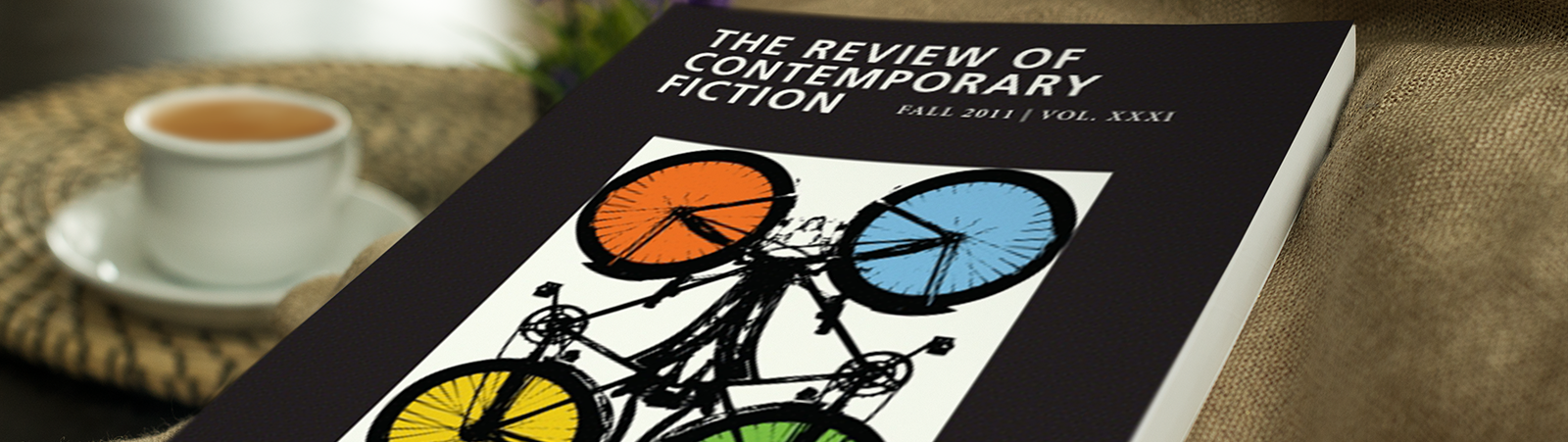
Awash in small-town gossip, petty jealousy, and intrigues, Manuel Puig's Heartbreak Tango is a comedic assault on the fault lines between the disappointments of the everyday world, and the impossible promises of commercials, pop songs, and movies. This melancholy and hilarious tango concerns the many women in orbit around Juan Carlos Etchepare, an impossibly beautiful Lothario wasting away ever-so-slowly from consumption, while those who loved and were spurned by him move on into workaday lives and unhappy marriages. Part elegy, part melodrama, and part dirty joke, this wicked and charming novel demonstrates Manuel Puig’s mastery of both the highest and lowest forms of life and culture.
FIRST EPISODE
The shadows on the dance floor,
this tango brings sad memories to mind,
let us dance and think no more
while my satin dress has a chance
to shine like a tear shines.
(from H. Manzi's tango "His Voice")
NOTICE APPEARING IN THE APRIL 1947 EDITION OF THE MONTHLY PUBLICATION OUR NEIGHBORHOOD, PRINTED IN THE TOWN OF VALLEJOS, PROVINCE OF BUENOS AIRES
"LAMENTED BEREAVEMENT. The untimely passing of Juan Carlos Etchepare on the 18th of April last, at the early age of twenty-nine, after suffering a long and distressing illness, has produced in the people of this town, of which the deceased was a beloved son, a profound sentiment of sorrowful dismay, notwithstanding the fact that many close friends knew of the serious disease with which the late lamented was afflicted.
This demise marks the loss of an element from our midst which, for his remarkable spirit and integrity, stood out among us as a human being of great worth, possessing as he did either vast attributes or gifts, such as his personal charm, which either distinguish or set apart those who possess this immeasurable wealth and who therefore earn the admiration, deference, or affection of either friends or strangers.
The remains of Juan Carlos Etchepare were interred in the local burial ground, accompanied to their final home by a grief-stricken funeral cortege."
Buenos Aires, May 12, 1947
My Dear Mrs. Etchepare:
I learned of the sad news from "Our Neighborhood" and after many doubts I got up the courage to send you my most heartfelt condolences on the death of your son.
I am Nélida Fernández de Massa, they used to call me Nené, remember? I've been living in Buenos Aires for several years now, soon after I got married I came to live here with my husband, but this terrible news made me decide to drop you a few lines despite the fact that after my marriage yourself and your daughter Celina had stopped speaking to me. In spite of everything poor Juan Carlos always said hello to me, may he rest in peace! The last time I saw him was nine years ago.
I don't know if you still hold a grudge against me, Mrs. Etchepare, but in any case I sincerely hope the good Lord is with you in this hour of need, it must be hard to resign oneself to such a loss, a son already a full-grown man.
In spite of the three hundred and two miles that separate Buenos Aires from Vallejos, I am by your side in this moment. Even though you may not wish it, let me pray with you.
Nélida Fernández de Massa
Under the new fluorescent light in the kitchen, she looks at her hands after closing the ink bottle, and noticing that the fingers which held the pen are stained, she goes to the sink to wash them off. With a stone she removes the ink and dries her hands with a dishtowel. She takes the envelope, wets the gummed edge with saliva and looks for a few seconds at the multicolored rhombuses on the oilcloth which covers the table.
*
Buenos Aires, May 24, 1947
Dear Mrs. Etchepare:
What a relief when I got your letter! The truth is I didn't expect it, I thought you would never forgive me. On the other hand I see that your daughter Celina still looks down upon me, and I will write to your post office box as you ask, so that you won't have arguments with her. You know what I thought when I saw your envelope? I thought that inside would be my unopened letter.
Mrs. Etchepare . . . I feel so sad, I know I shouldn't be telling you this, it's me who should be comforting you. But how can I explain, there's just nobody I can talk to about Juan Carlos, and all day long I keep thinking that such a young and good-looking boy had to have the misfortune of catching that disease. I often wake up at night and without wanting to I start thinking about Juan Carlos.
I knew that he was sick, that he had gone to the Cordoban Mountains to get better, but I don't know why . . . somehow I didn't feel sorry for him, or maybe I just couldn't believe that he could possibly die. Now I can only think of one thing since he never went to church, did he confess before dying? I hope to God he did, it's one more relief for those of us who remain after him, don't you think so? It's been quite a while since I last prayed, three years ago when my younger son was unwell, but now I've started praying again. Another thing I'm afraid of is that he might have gone through with what he wanted. Did he ever tell you? I hope to God he didn't! You see, Mrs. Etchepare, that too comes to my mind when I wake up at night: it so happens that Juan Carlos told me more than once that when he died he wanted to be cremated. It seems to me that the Catholic church disapproves of this, because the catechism says that after judgment Day will come the resurrection of the body and the soul. Now I don't go to confession these days since I got out of the habit years ago, but I am going to ask some Father about that. Yes, Mrs. Etchepare, of course Juan Carlos is resting, it suddenly came to me that at least he is resting, if not yet in Heaven. Oh yes, of that we can be sure, because Juan Carlos never hurt a soul. Well, I look forward to hearing from you soon.
Affectionately,
Nélida
In a drawer next to the child's rosary, first communion veil, and pictures of saints in the name of the child Alberto Luis Massa, there is a book covered in imitation mother-of-pearl. She leafs through it until she comes to a passage that predicts Judgment Day and the resurrection of the flesh.
*
Buenos Aires, June 10, 1947
Dear Mrs. Etchepare:
This afternoon when I came back from shopping downtown for some things for the boys, I found your letter. I felt a great relief in knowing that Juan Carlos confessed before dying and had a Christian burial. All considered it's a great comfort. And how are you doing? are you feeling a little cheerier? I'm still so down in the mouth.
Now you may find this uncalled-for, but when he went away to Córdoba the first time, he wrote quite a few love letters to me in Vallejos. He said things that I never forgot, which I shouldn't say because I'm a married woman now with two healthy children, two sons, one eight and the other six, God bless them, and I shouldn't be thinking about things years ago, but when I wake up at night I always think what a comfort it would be to reread the letters Juan Carlos wrote to me. When we stopped speaking to each other, and after what happened with Celina, we sent back the letters. It wasn't that we had an argument, it was just that one day I suddenly received all my letters by mail, the ones I had sent him in Córdoba, so then I returned all the ones he had written to me. He might have burned them, I don't know, maybe not . . . I had them tied in a sky-blue ribbon, because they were a boy's letters, he returned mine lumped together in a big envelope, and you should have seen how mad I got because they weren't tied in a pink ribbon as I had asked him when we were still on speaking terms, what things a girl would make a fuss about at that age. Those were the days.
Who knows if those letters are still around. If you yourself found them would you burn them? What are you folks planning to do with all those things of Juan Carlos's that are personal? I know that he once kept another girl's handkerchief with rouge on it, he told me so to get me all worked up. Then I wondered that if you didn't mind and you happened to find those letters he wrote me, that maybe you could send them to me.
Well, Mrs. Etchepare, I hope you'll keep writing to me, one thing that surprised me was your steady handwriting, it seems like a young person's, good for you, and to think that you suffered such a great misfortune lately. You don't have someone else write them for you, do you?
Remember that my letters are the ones in the sky-blue ribbon, that's enough to know which ones, because they don't have envelopes, when I kept them I was silly and threw away the envelopes, because I felt that they had been handled by other people, don't you think I was right in a way? In the post office many hands touch the envelopes, but only Juan Carlos, poor boy, touched the page inside, and then me, only us two, so the page inside really is an intimate thing. So now you know by the pretty blue ribbon, you don't have to read the heading to know which letters are mine.
Well, Mrs. Etchepare, I hope these words find you in better spirits.
Yours most affectionately,
Nené
She closes the envelope, turns on the radio, and starts to change out of old house clothes into a street dress. The program "Tango Versus Bolero" has just begun. A tango and a bolero are alternately played. The tango relates the misfortune of a man who in the winter rain remembers the warm moonlit night when he met his beloved and the following rainy night when he lost her, expressing his fear that the next day the sun will come out and not even then will she return to his side, a possible sign of her death. He finally asks that if she does not return, then neither should the geraniums in the patio blossom if its petals will only wither soon after. Next, the bolero describes a couple's separation despite their love for each other, a separation determined by secret reasons of his own: he cannot tell her the reason and asks her to believe that he will return if circumstances permit, as the fishing boat returns to its moorings if the storms in the Caribbean Sea do not wreck it. The program closes. In front of the mirror in which she continues looking at herself, after putting on lipstick and powdering her face, she gathers up her hair in an attempt to recreate a hairdo in vogue several years back.
Buenos Aires, June 22, 1947
Dear Mrs. Etchepare: I was just about to write without waiting for an answer when your nice little letter fortunately arrived. I am happy to know that things are easier now that you have less visitors, people mean well but don't realize that they're a bother when there are so many of them.
I was just about to write because in the last letter I forgot to ask you if Juan Carlos is buried in the ground, in a niche, or in some family mausoleum. I so much hope that he's not in the ground. Did you ever get into a pit that someone was digging,' Because then if you put your hand against the hard dirt in the hole you feel how cold and damp it is, with rocks, sharp pieces, and where the dirt is soft it's worse yet, because that's where the worms are. I'm not sure if those are the worms who later look for what for them is nutrition, better left unsaid, I don't know how they can get into such a thick and hard wooden box. Unless after many years the box rots away and they can get in, but then I don't know why boxes aren't made out of iron or steel. But now that I think of it I remember that it also seems that we carry the worms inside, I think I read that somewhere, that when medical students have their classes in the morgue they see the worms when they cut up the corpse, I'm not sure if I read it or if someone told me so. It's much better for him to be in a niche, although you can't put a lot of flowers there all on the same occasion, I also prefer that to being in a beautiful mausoleum, if it's not his own family's, because it would seem like they were doing him a favor. Oh, now I remember who told me that awful thing about us carrying the worms inside ourselves, it was Juan Carlos himself, that's why he wanted to be cremated, so that the worms wouldn't eat him. Forgive me if this upsets you, but who can I talk to about these memories if not with you?
What I'm not sure about is how to explain how Juan Carlos's letters began. How strange they don't have the pretty blue ribbon anymore. Did you find that many letters? How strange, Juan Carlos swore to me that it was the first time he ever wrote to a girl, of course after that the years passed, but what use were the letters if we broke up just the same, so that's why silly me got it into my head that he was dead set against the idea of corresponding with a girl. Just an idea I had, that's all.
The letters addressed to me were all written on the same paper which I bought for him along with a fountain pen when he went away to Cordoba. It's a kind of white paper with little wrinkles that almost seems like raw silk. The heading changes sometimes, he wouldn't use my name because he said it was compromising, in case my mother found them I could say they were letters for another girl. The main thing I think is that they're dated from July to September 1937, and if you happen to read a bit, Mrs. Etchepare, don't go and believe everything he says, that was Juan Carlos for you, he liked to get me all worked up.
Please try as hard as you can to find them and thank you so much for sending them to me.
As ever,
Nené
She hasn't addressed the envelope yet, she stands up abruptly, leaves the ink bottle opened and the pen on the blotter which absorbs a round stain. The folded letter touches the bottom of her apron pocket. She closes the bedroom door behind her, picks a piece of lint off the salt sculpture of Our Lady of Lujan which adorns the bureau and throws herself face down on the bed. With one hand she squeezes the silk fringe on the edge of the bedspread, the other hand lies still with its palm opened near the boudoir doll that takes up the center of the pillow. She exhales a sigh. She caresses the fringe for several minutes. Suddenly children's voices can be heard coming up the stairs of the apartment building, she drops the fringe and feels the letter in her pocket to make sure she hasn't left it in anyone's reach.